

6 min read · By Dr. Kevin Baharvand, Diplomate, American Board of Orthodontics
Short answer: “3D printed braces” is a catchy phrase for a few different things, from custom-printed brackets to in-office printing of models and retainers. The technology is real and useful, mostly behind the scenes. But a printed part doesn’t make treatment better on its own. Results come from the orthodontist’s planning, not the printer, which is why we use proven braces and Angel Aligners and adopt tech only when it clearly helps.
On this page
Every few months a new phrase makes the rounds and patients ask if they’re missing out. Lately it’s 3D printed braces. It sounds futuristic, and parts of it genuinely are. But the phrase gets used loosely, so before you decide whether you want them, it helps to know what you’d actually be getting.
What “3D printed braces” actually means
It’s not one thing. The label gets stretched across at least three different ideas. The first is custom brackets that are 3D printed to match your individual teeth, used in certain digital bracket systems. The second, and by far the most common in real practices, is in-office 3D printing of the supporting parts of treatment: study models, retainers, and the trays used to bond brackets precisely. The third is the frontier version, fully printed structural appliances, which is still mostly in research.
So when someone says 3D printed braces, they might mean a cutting-edge custom system, or they might just mean a modern office that prints its own retainers. Those are very different claims.
Where the tech genuinely helps today
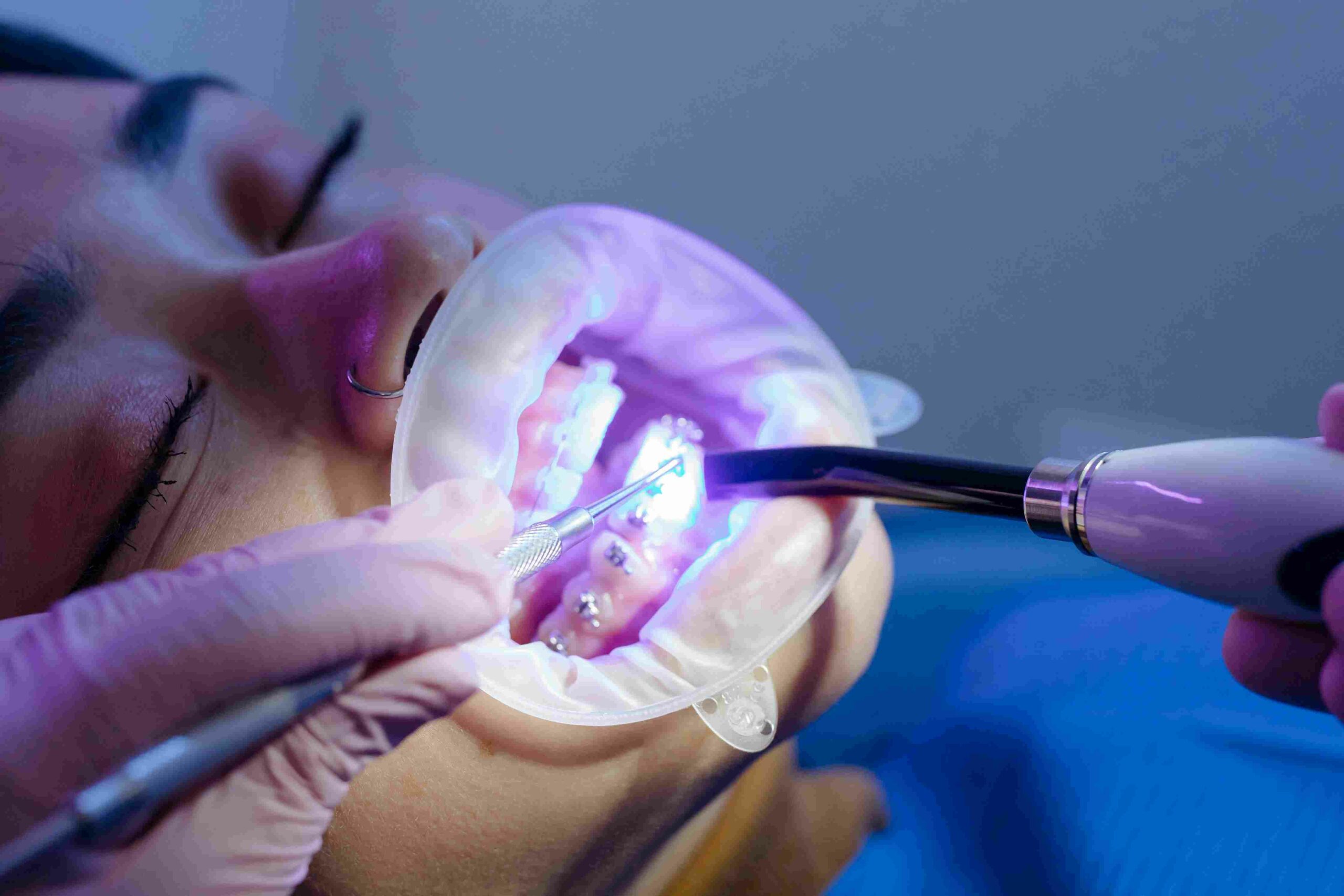
Here’s the part I’m happy to champion. 3D printing has quietly become a workhorse in good orthodontic offices. We scan your teeth digitally, skip the old gag-inducing impression trays, and print accurate models. Retainers can be produced from those digital files. Indirect bonding trays, which help place brackets exactly where the plan calls for, are printed too. Custom bracket systems use printing to tailor hardware to your anatomy.
All of that is real value. It makes treatment more precise and more comfortable to start. It just usually happens in the lab, not as a dramatic printed appliance snapping onto your teeth.
The promise vs the reality
The pitch for 3D printed braces is customization, precision, and speed. Those are worthwhile goals, and printing does contribute to them. The reality check is this: a bracket being printed instead of manufactured doesn’t move your teeth any better by itself. What moves teeth well is an accurate diagnosis, a smart treatment plan, and careful management of the forces along the way. Those are human skills. The printer is a tool in service of them.
The thing to remember: technology in orthodontics is a multiplier of skill, not a substitute for it. A great plan gets a little better with good tech. A weak plan doesn’t get rescued by a fancy printer. Judge the orthodontist first, the gadgets second.
What about cost?
Systems built around custom 3D-printed brackets tend to cost more, because the extra lab work and materials add up. Whether that premium is worth it depends entirely on your case. For a lot of patients, a proven set of braces or clear braces delivers an equally excellent result for less. Paying more for a printed label, without a clinical reason, isn’t a smart trade.
Our honest position
We’re not anti-technology, far from it. We use digital scanning and 3D printing every day where it improves accuracy and comfort, like models and retainers. When it comes to actually straightening teeth, we choose approaches with a long track record of excellent outcomes: quality braces and, when aligners fit the case, Angel Aligners, which we prefer over Invisalign for fit and comfort. Both are clear-aligner systems; Invisalign is simply the best-known brand.
Our rule is simple. We adopt technology when it clearly makes your result better or your experience easier, not because a term is trending. If fully 3D-printed braces mature into something that genuinely outperforms what we use now, we’ll be first in line. Until then, we’d rather give you a proven result than a novel one. If you’re comparing your options, our guide on whether Invisalign is worth it is a good companion read.
Frequently asked questions
What are 3D printed braces?
The term covers a few things: custom brackets that are 3D printed to fit your specific teeth, in-office 3D printing of models, retainers, and bonding trays, and early research into fully printed appliances. Most of the real, proven use today is behind the scenes in the lab workflow rather than a completely printed set of braces on your teeth.
Are 3D printed braces better than regular braces?
Not inherently. 3D printing can add customization and streamline the workflow, but the finished result depends far more on the orthodontist’s planning and hands than on whether a part was printed. High-quality conventional braces and clear aligners deliver excellent results, and technology only helps when it clearly improves care.
How much do 3D printed braces cost?
Systems that use custom 3D-printed brackets tend to sit at the higher end because of the added lab and materials cost. Price varies by case and provider. As with any treatment, the value is in the outcome and the expertise behind it, not the novelty of the process.
Does Elate Orthodontics use 3D printed braces?
We use digital scanning and 3D printing where it genuinely helps, such as models and retainers, and we choose proven braces and Angel Aligners for treatment because they deliver reliable, excellent results. We adopt technology when it improves your outcome, not for the marketing value.
Is 3D printing used in orthodontics at all?
Yes, widely, just not always in the way the phrase 3D printed braces suggests. Printing is already standard for study models, retainers, indirect bonding trays, and aligner molds. It is a valuable behind-the-scenes tool in modern practices, including ours.
Will 3D printed braces replace traditional braces?
Not in the near term. The technology is promising and evolving, but fully printed structural braces are still emerging and not the standard of care. For now, proven braces and aligners, planned and managed by an orthodontist, remain the reliable choice.
Want a plan built on what actually works?
We use the technology that improves your result and skip the tech that’s just marketing. Come in for a free consultation and we’ll show you the approach that fits your teeth, not the trend of the month.
You may also be interested in these
- Self-Ligating Braces: How They Work
- Is Invisalign Worth It? A Comprehensive Guide
- Orthodontic Elastics: What They Are and How They Work
Why families trust Elate Orthodontics
With over 1,000 five-star reviews across three locations, Elate Orthodontics is led by Dr. Kevin Baharvand, DMD, MS, a Diplomate of the American Board of Orthodontics, whose clinical work was recently selected for the cover of the American Journal of Orthodontics and Dentofacial Orthopedics, the most prestigious peer-reviewed journal in the field, and a national speaker on clear aligner treatment. Alongside Dr. Julia Kang, DMD, MS, both Boston University graduates and members of the Omicron Kappa Upsilon national honor society, our husband-and-wife team has been recognized as D Magazine Best Dentist 2026, Living Magazine Readers’ Choice 2026 Best Orthodontist in Frisco & Plano, Readers’ Choice Best Orthodontist in The Colony, Best New Business by the Chamber of Commerce, Nextdoor Neighborhood Favorite, and featured in Orthotown and Authority Magazine.
We serve families through three convenient offices in West Frisco, North Frisco, and The Colony, each staffed by the same trusted team, equipped with advanced technology, and committed to the personalized approach that consistently helps patients finish treatment sooner than expected. From braces and clear braces to Angel Aligners, we offer treatment for every age and every stage of life. We stay in-network with most insurance plans and offer flexible financing to make exceptional orthodontic care accessible for every family we serve.
Need general and family dentistry too? Our sister practice, Tribute Family Dentistry, provides dental care for all ages.
Book a free consultation: 972.538.4343
About the author
Dr. Kevin Baharvand, DMD, MS, is a Diplomate of the American Board of Orthodontics and a national speaker on clear aligner treatment. He practices at Elate Orthodontics’ offices in West Frisco, North Frisco, and The Colony, Texas.