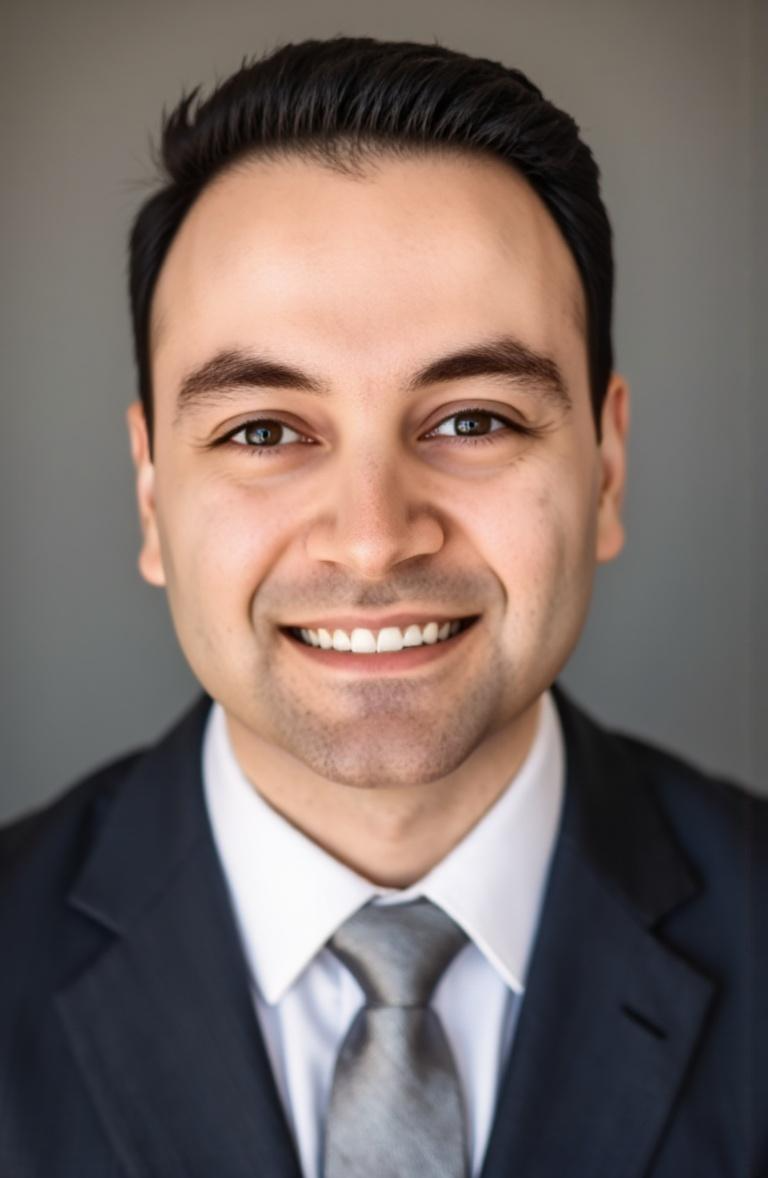


8 min read • By Dr. Kevin Baharvand, Diplomate, American Board of Orthodontics
SHORT ANSWER
Get a first evaluation around age seven, expect it to end in monitoring rather than braces, and treat the appointment schedule as the practical problem it actually is. Most Little Elm ISD families are already driving toward The Colony or Frisco for school and activities, which is where the nearest specialist offices sit. Braces versus aligners for a teenager depends on the teenager, not their age. And the real reason cases run long is missed appointments and broken brackets, not biology.
ON THIS PAGE
If your child is in Little Elm ISD, there is a decent chance a dentist, a teacher, or another parent has already mentioned braces. Knowing when to act, what the options are, and how any of it fits around a Strike or Prestwick schedule is a separate problem. This is the version I would give a parent sitting in my office.
When to get a first evaluation
The American Association of Orthodontists recommends a first orthodontic evaluation by about age seven. That number surprises parents, because seven-year-olds still have most of their baby teeth.
The reason is that by seven, the first adult molars and front teeth are usually coming in, which is enough for us to see how the bite is developing and whether there is going to be enough room. Crossbites, severe crowding, and jaw growth discrepancies are much simpler to address while a child is still growing.
To be clear about what usually happens: most children evaluated at seven get monitored, not treated. A first visit that ends with come back in a year is the normal outcome. If an office recommends starting treatment on a seven-year-old, it is entirely fair to ask what specifically would get worse by waiting.
Phase 1 and Phase 2, explained plainly
Phase 1 is early treatment while a child still has a mix of baby and adult teeth, usually somewhere between seven and ten. It targets specific problems that benefit from growth: widening a narrow upper jaw, correcting a crossbite, creating space, addressing a habit that is affecting development.
Phase 2 is the full treatment once all adult teeth are in, typically in the early teens. It aligns everything and finishes the bite.
The honest framing, and one worth having before anyone commits: Phase 1 does not usually eliminate Phase 2. It makes the second phase simpler, shorter, or less likely to need extractions. Some practices oversell early treatment as a way to avoid braces later, and that is not generally how it works. Our fuller comparison is here.
A useful question if Phase 1 is recommended: what specifically are we trying to accomplish, and what happens if we wait until all the adult teeth are in? A good answer names the problem and the growth window. A vague answer about getting a head start is not enough for two years of a child’s life.
Braces or aligners for your teen
| Braces | Clear aligners | |
|---|---|---|
| Depends on cooperation | No. They work whether or not your teen is organized. | Completely. About 22 hours a day. |
| Can be lost | No | Yes, usually in a napkin at lunch |
| Food restrictions | Yes, real ones | None, trays come out |
| Appearance | Visible. Colors are a genuine selling point for some kids. | Nearly invisible |
| Cost at Elate | Same | Same |
Since price is the same here, the decision comes down to your teenager honestly. And this is where I would push back on a common instinct. Parents often want aligners because they seem easier and less visible. But a kid who loses retainers, forgets things, or is going to be embarrassed to take trays out at a lunch table will do better with braces, and there is nothing wrong with saying so.
Worth knowing too: some kids actively want braces because of the colors. It sounds trivial. It is not. A teenager who is enthusiastic about their appliance takes care of it, and that matters more than the appliance itself.
Fitting it around a Little Elm ISD schedule
This is the part that decides whether treatment runs on time, and it gets almost no attention at consultations. Braces need adjusting every six to eight weeks for a year or more, during school and work hours. Missed appointments extend cases, quietly and reliably.
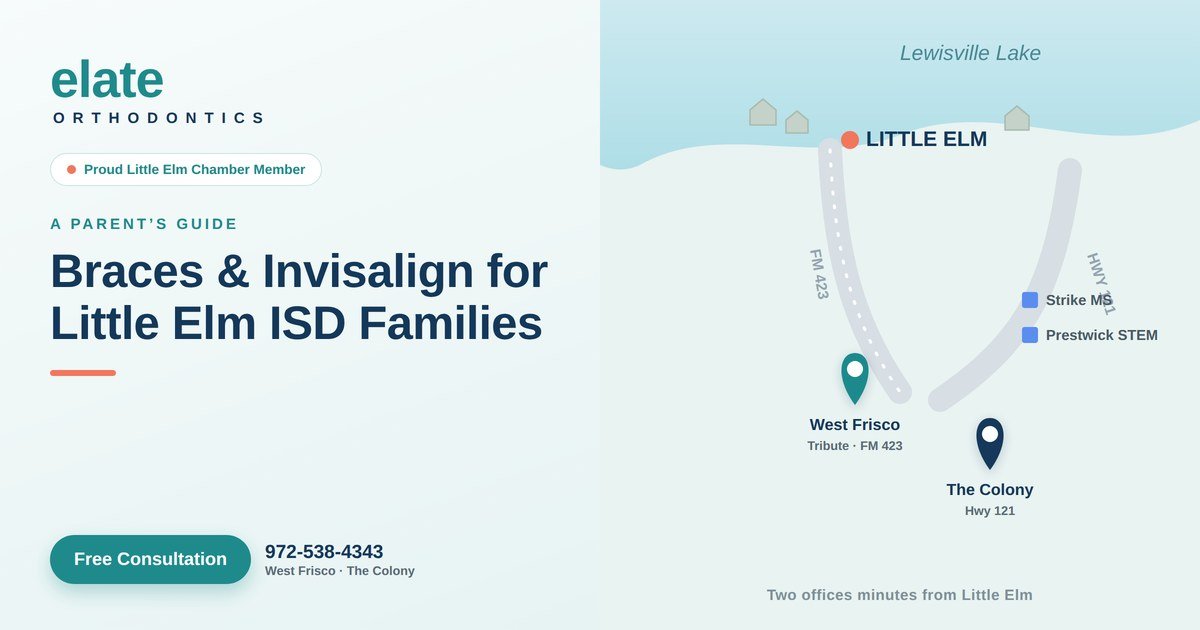
A geographic advantage worth knowing: Strike Middle School and Prestwick STEM Academy physically sit in The Colony, and Hackberry Elementary carries a Frisco address. So a lot of Little Elm families are already driving toward our offices twice a day. Our The Colony office on Highway 121 and our West Frisco office on FM 423 are both on routes you likely already use.
Three habits that help more than they should: book the next appointment before you leave the current one, ask which office has the earliest availability rather than defaulting to one, and tell us about competition seasons or exam weeks in advance so we can work around them.
Band, choir, and sports
Sports are straightforward: your child needs a mouthguard, and it should be one fitted over braces rather than a generic boil-and-bite. A bracket driven into a lip is a genuinely bad afternoon and it is preventable.
Wind instruments and singing take adjustment. Brass players usually have the hardest first few weeks because of the mouthpiece pressure, and wax over the front brackets helps a lot early on. Most students adapt within a month. We have more detail on this if your child is in band or choir.
If there is a major performance or competition coming up, tell us before we place appliances. Timing the start around it is sometimes possible and costs nothing to ask.
Cost and how families pay
Across this market, braces generally run about $3,500 to $6,000 depending on complexity, and most practices charge a premium for aligners. We price on case complexity rather than appliance, so aligners cost the same as braces here.
Most families land between $150 and $300 a month depending on down payment and plan length, and no credit check financing is available. The finance calculator gives you a number before you come in.
On insurance, ask your plan two things: what the orthodontic lifetime maximum is, and whether there is a waiting period before those benefits start. We verify benefits before your consultation. Flexible spending and health savings accounts also apply, which is effectively a discount at your tax rate.
Broken brackets and missed appointments are the two things that actually make treatment run long. Neither is about your child’s teeth.
Frequently asked questions
At what age should my child first be evaluated?
The American Association of Orthodontists recommends an evaluation around age seven. Most seven-year-olds need nothing at that point. The value is catching jaw growth issues and severe space shortages while growth can still be used to help.
Does an early evaluation mean early braces?
No, and this is the most common misunderstanding. The large majority of children evaluated at seven are simply monitored until their adult teeth arrive. A first visit that ends with see you in a year is the normal outcome, not a missed sale.
Braces or clear aligners for a teenager?
It depends far more on the individual teenager than on their age. Aligners only work if worn about 22 hours a day, and teen versions have wear indicators so we can check rather than guess. A teen who will not keep trays in gets a better result faster with braces.
How do we fit appointments around school?
Appointments run every six to eight weeks. We have three offices, so you can pick the one that fits that particular week, and after-school slots exist but book out. Booking your next appointment before leaving is the single best habit for avoiding scheduling stress.
What does treatment cost and how do families pay?
Braces in this market generally run about $3,500 to $6,000. At our offices aligners cost the same as braces, because we price on case complexity rather than appliance. Most families land between $150 and $300 monthly depending on down payment, and no credit check financing is available.
Will braces interfere with band, sports, or choir?
Sports need a mouthguard, which we will fit properly. Wind instruments and singing take a few weeks of adjustment and then most students are fine. Tell us what your child does and we will plan around competition or concert dates where we can.
Book a free evaluation
No referral needed, and if nothing needs doing yet we will tell you that. West Frisco on FM 423, The Colony on Highway 121, or North Frisco.
You may also be interested in these
- Orthodontist Near Little Elm: Why Families Come to Elate
- Phase 1 vs Phase 2 Orthodontic Treatment
- Braces, Aligners, Singing, and School Band
Why families trust Elate Orthodontics
1,000+ five-star reviews • 3 offices (two in Frisco, one in The Colony) • D Magazine Best Dentist 2026 • Living Magazine Readers’ Choice 2026
With over 1,000 five-star reviews across three locations, Elate Orthodontics is led by Dr. Kevin Baharvand, DMD, MS, a Diplomate of the American Board of Orthodontics, whose clinical work was recently selected for the cover of the American Journal of Orthodontics and Dentofacial Orthopedics, the most prestigious peer-reviewed journal in the field, and a national speaker on clear aligner treatment. Alongside Dr. Julia Kang, DMD, MS, both Boston University graduates and members of the Omicron Kappa Upsilon national honor society, our husband-and-wife team has been recognized as D Magazine Best Dentist 2026, Living Magazine Readers’ Choice 2026 Best Orthodontist in Frisco & Plano, Readers’ Choice Best Orthodontist in The Colony, Best New Business by the Chamber of Commerce, Nextdoor Neighborhood Favorite, and featured in Orthotown and Authority Magazine.
We serve families through three convenient offices in West Frisco, North Frisco, and The Colony, each staffed by the same trusted team, equipped with advanced technology, and committed to the personalized approach that consistently helps patients finish treatment sooner than expected. From braces and clear braces to Angel Aligners, we offer treatment for every age and every stage of life. We stay in-network with most insurance plans and offer flexible financing to make exceptional orthodontic care accessible for every family we serve.
Need general and family dentistry too? Our sister practice, Tribute Family Dentistry, provides dental care for all ages.
Book a free consultation: 972.538.4343
About the author
Dr. Kevin Baharvand, DMD, MS, is a Diplomate of the American Board of Orthodontics and a national speaker on clear aligner treatment. He practices at Elate Orthodontics in West Frisco, North Frisco, and The Colony, Texas.