

6 min read · By Dr. Kevin Baharvand, Diplomate, American Board of Orthodontics
Quick answer
Interproximal reduction (IPR), sometimes called filing, slenderizing, or stripping, is a routine orthodontic technique that removes a tiny sliver of enamel between teeth to create space. It is painless, safe when done properly, and often lets us fix crowding, improve the bite, and close dark triangles without pulling teeth. Each reduction is a fraction of a millimeter, and it is a standard part of many braces and clear aligner plans.
On this page
What filing between teeth actually means
The clinical name is interproximal reduction, or IPR. You might also hear it called enamel reduction, slenderizing, or stripping. They all describe the same thing: carefully removing a very small amount of enamel from the sides of teeth, where they touch their neighbors, to open up a little space.
The word filing sounds more dramatic than the reality. We are talking about a fraction of a millimeter per tooth, taken from the hard outer enamel layer that has no nerves. Enamel is thicker than most people assume, and IPR stays comfortably within it. Spread that tiny reduction across several teeth and it adds up to just enough room to make a real difference in alignment.
Why orthodontists do it
Space is the currency of orthodontics. Teeth that are crowded need somewhere to go, and IPR is one of the cleanest ways to create that room. Here is where it earns its place:
- Relieving crowding. Mild to moderate crowding often needs only a small amount of space, which IPR can provide without removing a tooth.
- Avoiding extractions. In the right cases, it means keeping all your teeth instead of pulling one.
- Closing black triangles. Reshaping the contact between teeth can eliminate the little dark gaps near the gumline that some people dislike.
- Improving fit and stability. Better-shaped contacts help the teeth meet properly and can improve how well the result holds over time.
Is IPR safe, and does it hurt?
Two questions, two reassuring answers. It does not hurt, because enamel has no nerves. You may feel a bit of pressure, a light vibration, and hear some noise, but there is nothing to numb. And it is safe when performed properly. Orthodontists remove only a small, measured amount, then polish the surface smooth and often apply fluoride to strengthen it. The technique has been studied and used for decades. When done professionally and not overdone, research does not show an increase in cavities or sensitivity. Smooth, polished enamel actually resists plaque better than a rough edge. This is a mainstream, evidence-backed technique, which is why the American Association of Orthodontists and clinicians everywhere consider it a normal part of care.
How it is done
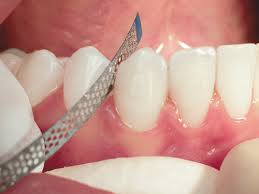
It is quick and low-drama. Depending on how much space is needed, we use fine abrasive strips that look a bit like emery boards, thin rotating discs, or small burs. The amount is planned in advance, often down to tenths of a millimeter per contact, and measured with a gauge as we go so we take exactly what the plan calls for and no more.
| Step | What happens |
|---|---|
| 1. Plan | We map exactly how much space is needed and which contacts to reduce |
| 2. Reduce | A fraction of a millimeter is gently removed with strips, discs, or burs |
| 3. Measure | A gauge confirms the exact amount so nothing is overdone |
| 4. Polish & protect | The surface is smoothed and often treated with fluoride |
IPR pairs naturally with both braces and clear aligners. In fact, aligner plans lean on it often, using small planned reductions to open room for teeth to slide into line. Most people call clear aligners "Invisalign," but that is one brand of several, and we prefer Angel Aligners in most cases.
IPR vs extraction vs expansion
IPR is one of three main ways to create space, and the right choice depends on how much you need. For mild crowding, a little IPR often does the job while keeping every tooth. For a narrow arch, widening it with expansion may be the better route. For severe crowding or significant protrusion, removing a tooth can still be the most sensible plan. Good orthodontics is not loyal to any one method. It matches the tool to the amount of space required and picks the least invasive option that gives a stable, healthy result.
If you have been told you need extractions, it is fair to ask whether IPR could create the space instead. Sometimes the answer is yes, sometimes no. Either way, you deserve to understand why.
The bottom line: filing between teeth is a small, precise, well-established step that quietly does a lot of good work. Handled by an experienced orthodontist, it is a safe way to get a better-fitting, better-looking smile, often while keeping all your natural teeth.
Told you need extractions? Get a second opinion.
Sometimes a little IPR creates the space instead. We will show you the options for your smile. Your first visit is free.
Frequently asked questions
Does interproximal reduction hurt?
No. Teeth have no nerves in the outer enamel, so the amount removed during IPR is not something you feel as pain. Most patients notice a little pressure or vibration and a bit of noise, and that is it. No numbing is usually needed.
Is IPR safe? Will it ruin my enamel?
It is safe when done properly. Orthodontists remove only a fraction of a millimeter, well within the enamel’s thickness, and finish by smoothing and often applying fluoride. Decades of use and research support it. What matters is that it is measured and done by a professional, not overdone.
Will filing between my teeth cause cavities?
Research does not show a higher cavity rate from properly performed IPR. The enamel that remains is polished smooth, which actually resists plaque better than a rough surface. Normal brushing and flossing keep those areas healthy.
How much enamel is removed?
Very little, typically between 0.2 and 0.5 millimeters per contact, spread across several teeth as needed. Added up it can free the small amount of space that resolves mild crowding, but each individual reduction is tiny.
IPR or extraction, which is better?
It depends on how much space you need. For mild to moderate crowding, IPR can create enough room without removing a whole tooth. For severe crowding or protrusion, extraction may still be necessary. The goal is always to use the least invasive option that gets a stable, healthy result.
Is IPR used with Invisalign and clear aligners?
Yes, very commonly. Clear aligners often rely on small, planned amounts of IPR to make room for teeth to move into alignment. It is a routine part of many aligner and braces plans, including with Angel Aligners.
You may also be interested in these
Why families trust Elate Orthodontics
1,000+ five-star reviews · 3 offices (two in Frisco, one in The Colony) · D Magazine Best Dentist 2026 · Living Magazine Readers’ Choice 2026
With over 1,000 five-star reviews across three locations, Elate Orthodontics is led by Dr. Kevin Baharvand, DMD, MS, a Diplomate of the American Board of Orthodontics, whose clinical work was recently selected for the cover of the American Journal of Orthodontics and Dentofacial Orthopedics, the most prestigious peer-reviewed journal in the field, and a national speaker on clear aligner treatment. Alongside Dr. Julia Kang, DMD, MS, both Boston University graduates and members of the Omicron Kappa Upsilon national honor society, our husband-and-wife team has been recognized as D Magazine Best Dentist 2026, Living Magazine Readers’ Choice 2026 Best Orthodontist in Frisco & Plano, Readers’ Choice Best Orthodontist in The Colony, Best New Business by the Chamber of Commerce, Nextdoor Neighborhood Favorite, and featured in Orthotown and Authority Magazine.
We serve families through three convenient offices in West Frisco, North Frisco, and The Colony, each staffed by the same trusted team, equipped with advanced technology, and committed to the personalized approach that consistently helps patients finish treatment sooner than expected. From braces and clear braces to Angel Aligners, we offer treatment for every age and every stage of life. We stay in-network with most insurance plans and offer flexible financing to make exceptional orthodontic care accessible for every family we serve.
Need general and family dentistry too? Our sister practice, Tribute Family Dentistry, provides dental care for all ages.
West Frisco
North Frisco
The Colony
Book a free consultation: 972.538.4343
About the author
Dr. Kevin Baharvand, DMD, MS, is a Diplomate of the American Board of Orthodontics and a national speaker on clear aligner treatment. He practices alongside Dr. Julia Kang at Elate Orthodontics’ three North Texas offices in West Frisco, North Frisco, and The Colony. Meet Dr. B →