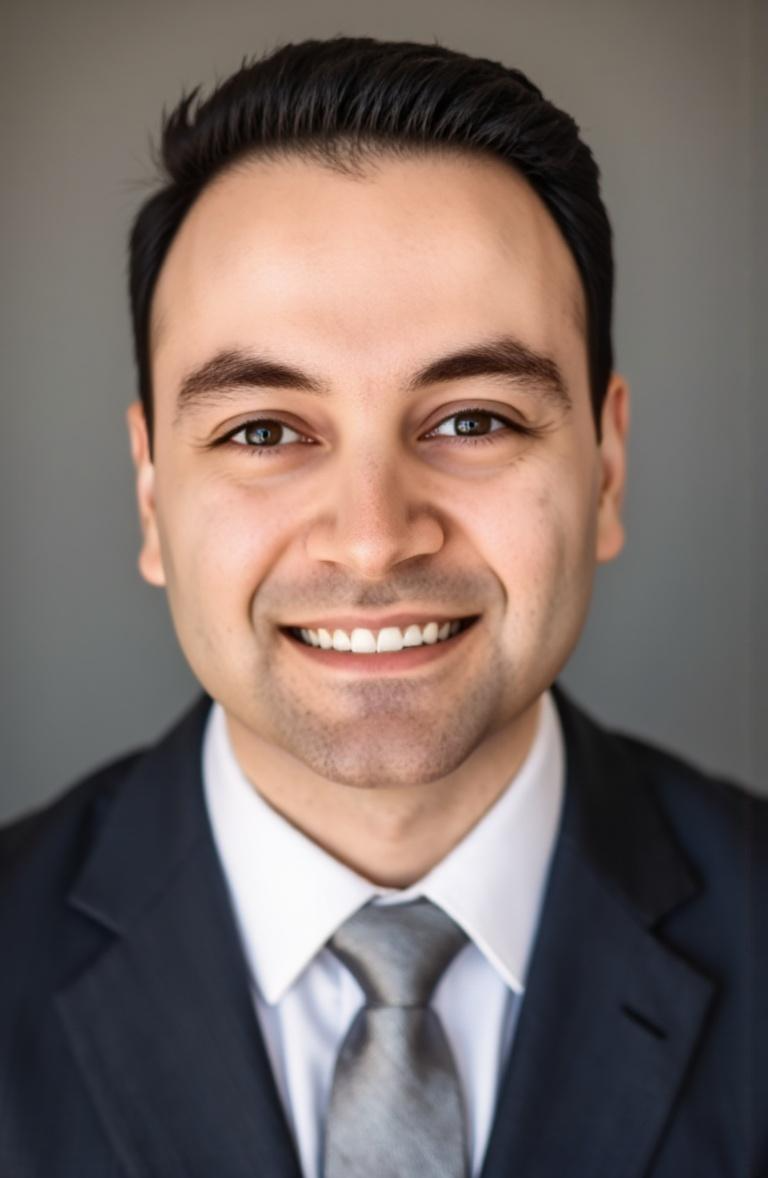


7 min read • By Dr. Kevin Baharvand, Diplomate, American Board of Orthodontics
SHORT ANSWER
Lingual braces work. That was never the issue. They cost considerably more than braces or aligners, they irritate the tongue in a way people underestimate, they change your speech for a few weeks and sometimes longer, and relatively few orthodontists place enough of them to be good at it. For most adults who want a discreet option, clear aligners or ceramic braces get you there with fewer tradeoffs. There is a narrow group who should still consider lingual, and I will describe them honestly rather than pretend they do not exist.
ON THIS PAGE
What lingual braces are
Same idea as regular braces, mounted on the wrong side. Brackets bond to the tongue-facing surface of each tooth and a wire connects them, so from the front you see nothing at all. Most modern systems use brackets custom-milled for each individual tooth from a digital scan, because the inner surfaces of teeth vary far more in shape than the flat outer surfaces do.
The mechanics are legitimate. This is not a gimmick appliance. An orthodontist who does a lot of lingual can finish beautiful cases with it.
Why they sound perfect
The people who ask me about lingual braces almost always share a specific profile. They want treatment nobody can see. They do not trust themselves to wear aligners 22 hours a day, and they are being honest with themselves about that, which I respect. And they would rather accept some discomfort than look at brackets in the mirror for two years.
On paper lingual solves all three at once. Truly invisible, fixed in place so compliance is not a variable, and effective. I understand the appeal completely. The problem is what the brochure leaves out.
The four problems, in order of how much they matter
1. Your tongue lives there
This is the one people underestimate most. Your tongue rests against the inside of your teeth all day and moves across it constantly while you talk and swallow. Put hardware there and you get sustained irritation, sometimes ulceration along the tongue border, in a spot that never gets a break. With conventional braces the lips and cheeks toughen up in a couple of weeks. The tongue is less forgiving.
2. Speech changes, and sometimes it stays changed
The brackets sit exactly where your tongue needs to hit the palate to make S and T sounds. A lisp is normal for the first few weeks and most people adapt. Some do not fully adapt. If you teach, present, sell, sing, or practice law for a living, this deserves more weight than it usually gets in the sales conversation.
3. Cost
Lingual is typically the most expensive option on the menu, often meaningfully more than braces or aligners. Custom brackets mean lab fees. Working on the back of teeth in a mirror is slower and technically harder, so chair time goes up. You are paying for both.
4. Finding someone who does them well
This is the quiet one. Lingual is a genuinely different skill set with its own learning curve, and because demand stayed low, most orthodontists never built enough volume to get fluent in it. An appliance is only as good as the hands placing it. I would rather send you to someone excellent with ceramic braces than have you treated by someone doing their fifteenth lingual case.
Notice that none of these four is about whether the teeth end up straight. That is why the honest framing is not that lingual braces do not work. It is that you pay more, in money and daily discomfort, for a benefit that clear aligners largely deliver already.
How they compare to the alternatives
| Lingual | Clear aligners | Ceramic braces | |
|---|---|---|---|
| Visibility | None | Nearly none | Visible up close |
| Speech effect | Real, weeks or longer | Slight, days | None |
| Depends on your discipline | No | Yes, heavily | No |
| Complex bite correction | Good | Fair to good | Excellent |
| Comfort | Hardest on the tongue | Most comfortable | Standard |
| Relative cost | Highest | Standard here | Standard here |
Worth saying plainly: at our offices, Angel Aligners and clear braces are priced the same as metal braces. Most practices charge a premium for the discreet options, which is part of why the lingual price tag lands as hard as it does elsewhere. Also, most people say Invisalign generically, but that is one brand of clear aligner among several.
Who they actually make sense for
I would be overstating my case if I said nobody should ever get lingual braces. There is a real, narrow group: someone whose situation genuinely does not permit anything visible on the front teeth, who is not a good aligner candidate either because of case complexity or because they know they will not wear them, and whose work does not depend on speaking clearly for the next month.
If that describes you, the advice is not to avoid lingual. It is to find someone who does a high volume of it, ask how many cases they finish a year, and accept the cost as the price of a specific requirement. That is a rational decision.
For everyone else, and that is most people who ask me about it, the discretion they want is already available for less money and less daily aggravation. That is the whole argument.
Lingual braces are not a bad appliance. They are an expensive answer to a question that clear aligners already answered.
Frequently asked questions
Do lingual braces actually work?
Yes. In experienced hands they move teeth and finish cases well. Effectiveness was never the problem with them. Cost, comfort, speech, and the number of clinicians who do them well are the problems.
Why are lingual braces so expensive?
The brackets are usually custom made for each tooth from a digital scan, which adds lab cost. The chairside work is slower and harder because the orthodontist is working on the tongue side. Both get priced in.
How long does the lisp last?
Most people adapt within two to four weeks, though some never fully lose it. If you speak for a living, that is not a minor footnote. It is the main thing to weigh.
Are lingual braces more painful than regular braces?
Different rather than worse. The soreness from tooth movement is comparable. The tongue irritation is specific to lingual and is the complaint people actually raise, because your tongue touches those brackets constantly.
Is there anyone lingual braces make sense for?
Yes, a narrow group. Someone who genuinely cannot have anything visible on the front of the teeth, who is not a candidate for aligners, and who is not going to be derailed by a temporary speech change. That is a real person, just not a common one.
What should I choose instead?
For most adults wanting discretion, clear aligners or ceramic braces on the front. Aligners are effectively invisible and removable. Ceramic braces are visible up close but far less than metal, and they handle complex movements more predictably than aligners.
Want a discreet option without the tradeoffs?
Come see what your case actually needs. Consultations are free. Two Frisco offices plus The Colony.
You may also be interested in these
- Clear Aligners vs Invisalign: What Is Actually Different
- Self-Ligating Braces: What They Do and Do Not Do
- Is Invisalign Worth It? A Complete Guide
Why families trust Elate Orthodontics
1,000+ five-star reviews • 3 offices (two in Frisco, one in The Colony) • D Magazine Best Dentist 2026 • Living Magazine Readers’ Choice 2026
With over 1,000 five-star reviews across three locations, Elate Orthodontics is led by Dr. Kevin Baharvand, DMD, MS, a Diplomate of the American Board of Orthodontics, whose clinical work was recently selected for the cover of the American Journal of Orthodontics and Dentofacial Orthopedics, the most prestigious peer-reviewed journal in the field, and a national speaker on clear aligner treatment. Alongside Dr. Julia Kang, DMD, MS, both Boston University graduates and members of the Omicron Kappa Upsilon national honor society, our husband-and-wife team has been recognized as D Magazine Best Dentist 2026, Living Magazine Readers’ Choice 2026 Best Orthodontist in Frisco & Plano, Readers’ Choice Best Orthodontist in The Colony, Best New Business by the Chamber of Commerce, Nextdoor Neighborhood Favorite, and featured in Orthotown and Authority Magazine.
We serve families through three convenient offices in West Frisco, North Frisco, and The Colony, each staffed by the same trusted team, equipped with advanced technology, and committed to the personalized approach that consistently helps patients finish treatment sooner than expected. From braces and clear braces to Angel Aligners, we offer treatment for every age and every stage of life. We stay in-network with most insurance plans and offer flexible financing to make exceptional orthodontic care accessible for every family we serve.
Need general and family dentistry too? Our sister practice, Tribute Family Dentistry, provides dental care for all ages.
Book a free consultation: 972.538.4343
About the author
Dr. Kevin Baharvand, DMD, MS, is a Diplomate of the American Board of Orthodontics and a national speaker on clear aligner treatment. He practices at Elate Orthodontics in West Frisco, North Frisco, and The Colony, Texas.