

6 min read · By Dr. Kevin Baharvand, Diplomate, American Board of Orthodontics
Quick answer
Orthodontic headgear is a growth-guiding appliance worn mostly outside the mouth. It uses gentle, steady force to hold back or move the upper jaw and teeth while a child is still growing, which helps fix severe overbites, underbites, and crowding that braces alone cannot address. It is worn 12 to 14 hours a day, usually at home and overnight, and it is used far less often now that expanders, bone anchors, and functional appliances can do similar work.
On this page
What orthodontic headgear actually is
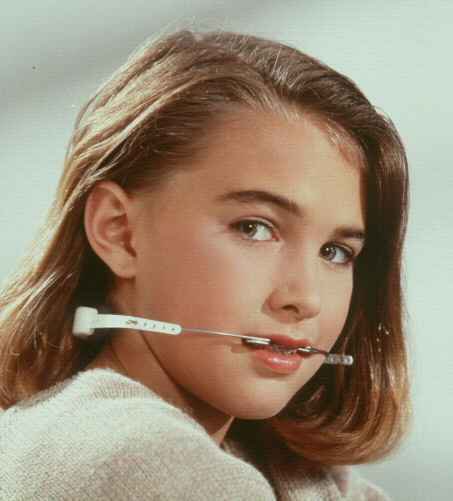
Headgear is one of the older tools in orthodontics, and it still looks the part. A metal framework fits around the head or neck and connects to the teeth or an appliance inside the mouth. The part people picture, the wire bow across the front, is called a facebow. It hooks into small tubes on the back molars and links to straps that anchor against the head or neck.
Here is the key idea. Braces and aligners move teeth against each other. Headgear does something braces cannot: it reaches outside the mouth for anchorage, which lets an orthodontist apply force to the whole upper jaw, not just the teeth. That external leverage is what makes it useful for the bite problems that come from how the jaws are positioned, not just how the teeth are lined up.
How headgear works
The whole thing runs on a simple principle: light, constant force applied over time reshapes how bone and teeth develop. In a growing child, the upper jaw (the maxilla) is still moving forward and down each year. Headgear taps into that growth. Depending on the setup, it can slow the forward growth of the upper jaw, pull upper molars backward to open up space, or in the reverse configuration, encourage an underdeveloped upper jaw to come forward.
Because it depends on active growth, timing is everything. Use it while the jaws are still developing and you can steer them. Wait until growth finishes and the same appliance does very little. That is why headgear is a kids-and-teens tool, and why your orthodontist watches jaw growth so closely during the early years.
The main types of headgear
Not all headgear looks or acts the same. The three you are most likely to hear about differ by where they anchor and which direction they pull.
| Type | Anchors against | Commonly used for |
|---|---|---|
| Cervical-pull | The back of the neck | Overbite; holding back upper-jaw growth |
| High-pull | The top and back of the head | Overbite with deep bite; controlling molar height |
| Reverse-pull (facemask) | The forehead and chin | Underbite; pulling an underdeveloped upper jaw forward |
What headgear treats
Headgear earns its place with jaw-based problems. A severe overbite, where the upper teeth and jaw sit too far ahead of the lower, is the classic case for cervical or high-pull headgear. A true skeletal underbite in a young child, where the upper jaw lags behind, is the case for a reverse-pull facemask. It also helps create room in a crowded arch by moving molars back so the other teeth have somewhere to go.
Worth knowing: headgear corrects the underlying jaw relationship. It is almost always paired with braces that fine-tune the individual teeth. One sets the foundation; the other does the detailing.
Wearing headgear day to day
This is where treatment succeeds or stalls. Headgear only does its job while it is on, and most kids need 12 to 14 hours a day to see results on schedule. The realistic plan is simple: put it on after school and wear it through the evening and overnight. That gets you to the target without wearing it to class.
A few things make it easier. Take it off for meals, brushing, and contact sports, then put it right back on. Expect three or four tender days after each adjustment, which regular over-the-counter pain relief handles fine. And build it into a routine, because the kids who treat it like a nightly habit finish far sooner than the ones who wear it in fits and starts.
The single biggest predictor of success is not the appliance. It is the hours. Consistent wear beats occasional long stretches every time.
Modern alternatives to headgear
Honest take: we reach for headgear far less than orthodontists did a generation ago. The tools have improved. Temporary anchorage devices, tiny screws placed in the bone, can provide the same anchorage headgear gives without anything worn on the head. Palatal expanders handle many width problems. Functional appliances address certain bites. And for the right cases, Angel Aligners or other clear aligners can do work that once required more hardware. Most people call clear aligners "Invisalign," but that is one brand in a category with several strong systems, and we prefer Angel Aligners in most cases for fit and value.
That said, headgear has not disappeared for a reason. In select growth cases, especially early underbite correction, a facemask still does something no aligner can. The right question is not headgear versus everything else. It is which tool fits your child’s specific jaw pattern and stage of growth, and that is exactly what an exam sorts out.
Wondering if your child needs headgear or a modern alternative?
A quick growth-and-bite exam tells you what is really going on. Your first visit is free.
Frequently asked questions
Does orthodontic headgear hurt?
There is usually some pressure and tenderness for the first few days, especially right after an adjustment. That settles quickly. If a facebow or strap is actually painful, digging in, or leaving marks, that is worth a call. It should feel firm, not sharp.
How many hours a day does headgear need to be worn?
Most protocols call for 12 to 14 hours a day, which usually means after school, in the evening, and overnight. Headgear only works while it is on, so consistency matters far more than intensity. Skipping days is the number one reason treatment stalls.
At what age is headgear used?
Headgear works by guiding jaw growth, so it is almost always used in growing children and teens, often between ages 9 and 14 while the jaws are still developing. In adults, whose growth is finished, an orthodontist typically reaches for other tools instead.
Do kids still need headgear, or are there alternatives?
We use it far less than we did 20 years ago. For many bite problems, temporary anchorage devices (small bone anchors), functional appliances, palatal expanders, or clear aligners can achieve similar results with less bulk. Headgear is still the right answer in select cases, but it is no longer the default.
Can you eat with headgear on?
You take it off to eat and brush, then put it right back on. That is part of why the daily-hours target matters, because meals and school already eat into wear time.
How long is headgear worn overall?
It varies with the severity of the bite and how faithfully it is worn, but many kids use it for roughly 12 to 18 months as one phase of a longer treatment plan. Your orthodontist tracks progress and pulls it as soon as the goal is met.
You may also be interested in these
Why families trust Elate Orthodontics
1,000+ five-star reviews · 3 offices (two in Frisco, one in The Colony) · D Magazine Best Dentist 2026 · Living Magazine Readers’ Choice 2026
With over 1,000 five-star reviews across three locations, Elate Orthodontics is led by Dr. Kevin Baharvand, DMD, MS, a Diplomate of the American Board of Orthodontics, whose clinical work was recently selected for the cover of the American Journal of Orthodontics and Dentofacial Orthopedics, the most prestigious peer-reviewed journal in the field, and a national speaker on clear aligner treatment. Alongside Dr. Julia Kang, DMD, MS, both Boston University graduates and members of the Omicron Kappa Upsilon national honor society, our husband-and-wife team has been recognized as D Magazine Best Dentist 2026, Living Magazine Readers’ Choice 2026 Best Orthodontist in Frisco & Plano, Readers’ Choice Best Orthodontist in The Colony, Best New Business by the Chamber of Commerce, Nextdoor Neighborhood Favorite, and featured in Orthotown and Authority Magazine.
We serve families through three convenient offices in West Frisco, North Frisco, and The Colony, each staffed by the same trusted team, equipped with advanced technology, and committed to the personalized approach that consistently helps patients finish treatment sooner than expected. From braces and clear braces to Angel Aligners, we offer treatment for every age and every stage of life. We stay in-network with most insurance plans and offer flexible financing to make exceptional orthodontic care accessible for every family we serve.
Need general and family dentistry too? Our sister practice, Tribute Family Dentistry, provides dental care for all ages.
West Frisco
North Frisco
The Colony
Book a free consultation: 972.538.4343
About the author
Dr. Kevin Baharvand, DMD, MS, is a Diplomate of the American Board of Orthodontics and a national speaker on clear aligner treatment. He practices alongside Dr. Julia Kang at Elate Orthodontics’ three North Texas offices in West Frisco, North Frisco, and The Colony. Meet Dr. B →