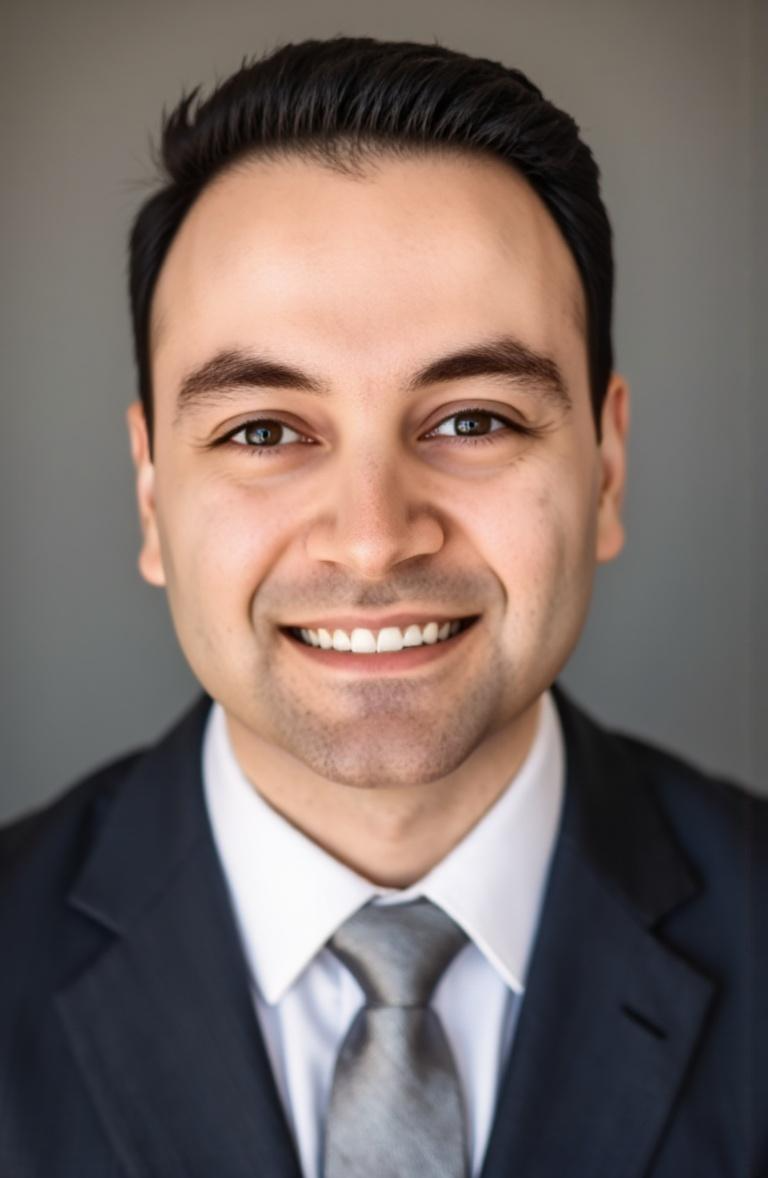


6 min read · By Dr. Kevin Baharvand, Diplomate, American Board of Orthodontics · Choosing an Orthodontist
Short answer: Every orthodontist is a dentist, but not every dentist is an orthodontist. A general dentist and an orthodontist both work in your mouth, yet only an orthodontist completes two to three extra years of accredited residency dedicated entirely to moving teeth and correcting bites. For anything past the simplest cosmetic nudge, that specialty training is what protects your roots, your bite, and your result.
On this page
Dentist vs orthodontist: same mouth, different job
Here is the cleanest way to think about it. Your general dentist keeps your teeth and gums healthy. They clean, fill cavities, place crowns, treat gum disease, and catch problems early. That work matters, and a great dentist is worth their weight in gold.
An orthodontist does one thing: move teeth and guide how the upper and lower jaws fit together. Straightening a crowded smile, closing a gap, fixing an overbite or crossbite, planning treatment around a child’s growth. It is a separate specialty, the same way a cardiologist is a separate specialty from a family doctor. Both went to medical school. You still want the heart specialist for your heart.
The training gap is bigger than it looks
Every orthodontist starts as a dentist. After dental school, though, they compete for a spot in an accredited orthodontic residency and spend two to three more years studying nothing but tooth movement, jaw growth, and bite mechanics. That is thousands of supervised hours on cases just like yours before they ever treat you solo.
A big part of that training is diagnosing malocclusion, which is the technical word for a bad bite. Malocclusion covers crowding, spacing, overbite, underbite, crossbite, and open bite, and each one moves teeth differently. Reading which forces to apply, in what order, and when to stop is exactly what those extra years teach. It is knowledge a general dentist, however talented, was never meant to specialize in.
Board certification goes one step further. A Diplomate of the American Board of Orthodontics has voluntarily submitted real cases for peer review and passed rigorous exams beyond the minimum needed to practice. It is a signal worth looking for.
A useful rule of thumb: if the plan involves moving more than one or two teeth, or touching your bite at all, that is a job for someone who does it every single day.
What dentists do well, and where ortho gets tricky
None of this is a knock on general dentists. Plenty of them offer clear aligners now, and for a very mild case with a healthy bite, that can work out fine. The trouble starts when a case looks simple on the surface but is not.
Teeth are connected to roots, bone, and a bite that has to function for decades. Move the crowns to look straight while ignoring the roots or the way the jaws meet, and you can create problems that were not there before. Common ones include:
- Prolonged treatment. The wrong sequence of moves drags a six-month case into two years.
- Relapse. Teeth drift back toward where they started when the bite was never truly stabilized.
- Root and gum damage. Too much force, or force in the wrong direction, can shorten roots or stress the gums.
- An open bite. Front teeth that no longer touch, which makes biting into food genuinely harder.
An orthodontist plans for all of that from the first appointment, because avoiding it is the entire job.
The risk with dentist-led and mail-order aligners
Most people say “Invisalign” when they mean clear aligners, but Invisalign is one brand of clear aligner, not the treatment itself. At Elate we use both Invisalign and Angel Aligners, and we often reach for Angel Aligners because the material and planning suit a lot of our cases well.
Aligners are a tool. They are only as good as the plan behind them. When a general dentist orders aligners from a lab, or when a mail-order company skips the in-person exam entirely, the diagnosis and the fine-tuning that an orthodontist provides are missing. That is why so many “my dentist did my aligners” stories end with a bite that looks straighter but no longer fits together, and a trip to an orthodontist to fix it.
Complex situations almost always need more than aligners alone. Severe crowding, big bite discrepancies, impacted teeth, or jaw-growth issues in kids may call for braces, a palate expander, or a combination approach. Deciding that correctly is a diagnosis, and diagnosis is where the specialty earns its keep.
Side by side comparison
| General Dentist | Orthodontist | |
|---|---|---|
| Training after dental school | None required in orthodontics | 2 to 3 year accredited residency |
| Main focus | Overall dental health | Moving teeth and correcting bites |
| Everyday work | Cleanings, fillings, crowns, gum care | Braces, aligners, expanders, retainers |
| Best for | Routine care, very mild cosmetic cases | Any real alignment or bite correction |
| Complex bite or jaw cases | Usually refers out | Handles start to finish |
Straight teeth are the easy part. A bite that works for the next 40 years is the part worth a specialist.
So how do you actually choose?
You do not have to pick a side. Keep seeing your general dentist for checkups and cleanings, and see an orthodontist for the straightening plan. The two work best together, and a good orthodontist will happily coordinate with your dentist.
When you are choosing an orthodontist, a few questions cut through the noise fast, and we walk through them in our guide on what to ask at an orthodontic consultation. Ask whether they are a Diplomate of the American Board of Orthodontics. Ask how many cases like yours they treat. Ask to see before-and-after results. And pay attention to whether they explain the plan in a way that makes sense to you.
If cost is on your mind, it usually should be part of the conversation too. Our breakdown of braces versus clear aligner costs and our look at keeping orthodontics affordable in Texas can help you plan. For a wider view of the specialty, the American Association of Orthodontists is a solid, non-commercial place to read up.
Not sure who to see? Start with a free orthodontic exam.
We will tell you honestly whether you need treatment, and if so, exactly what it involves. No pressure, no obligation.
Frequently asked questions
Can a general dentist do Invisalign or clear aligners?
Some can, and legally they are allowed to. The question is not whether a dentist can order aligners, it is whether the treatment is planned by someone who moves teeth every day. Clear aligners are a delivery method, not a diagnosis. An orthodontist plans the whole arch, the bite, and the finish, which is where general-dentist aligner cases most often fall short.
Is an orthodontist just a dentist with extra training?
Every orthodontist is a dentist first, then completes an accredited residency of two to three additional years focused only on tooth movement, bite correction, and facial growth. So yes, extra training, but that training is the whole point. It is the difference between someone who occasionally straightens teeth and someone who does nothing else.
Do I need a referral from my dentist to see an orthodontist?
No. You can book an orthodontic consultation directly. Many patients come to us on their own, and we are happy to coordinate with your regular dentist so your cleanings, fillings, and orthodontic care all stay on the same page.
Is getting orthodontic treatment from a dentist cheaper?
Sometimes the sticker price looks lower, but a mismanaged case can cost far more to fix. Redoing treatment, correcting a bite that was left open, or repairing relapse adds time and money. A well-planned case done once is usually the better value.
How do I know if my orthodontist is board-certified?
Ask whether they are a Diplomate of the American Board of Orthodontics. Board certification is voluntary and goes beyond the minimum required to practice. At Elate, Dr. Kevin Baharvand is a Diplomate of the American Board of Orthodontics.
What should I do if my dentist recommends aligners?
Get a second opinion from an orthodontist before you start. A consultation is usually free, and it tells you whether aligners alone will actually fix your bite or whether you need a different plan. There is no downside to hearing it from a specialist first.
You may also be interested in these
Why families trust Elate Orthodontics
1,000+ five-star reviews · 3 offices (two in Frisco, one in The Colony) · D Magazine Best Dentist 2026 · Living Magazine Readers’ Choice 2026
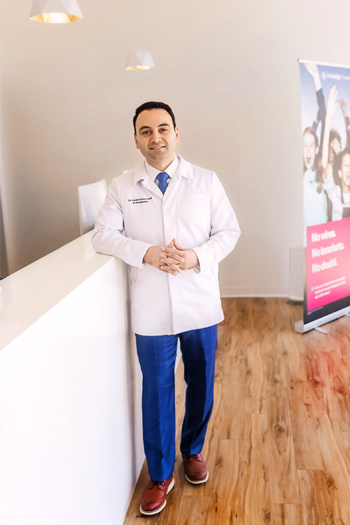
With over 1,000 five-star reviews across three locations, Elate Orthodontics is led by Dr. Kevin Baharvand, DMD, MS, a Diplomate of the American Board of Orthodontics, whose clinical work was recently selected for the cover of the American Journal of Orthodontics and Dentofacial Orthopedics, the most prestigious peer-reviewed journal in the field, and a national speaker on clear aligner treatment. Alongside Dr. Julia Kang, DMD, MS, both Boston University graduates and members of the Omicron Kappa Upsilon national honor society, our husband-and-wife team has been recognized as D Magazine Best Dentist 2026, Living Magazine Readers’ Choice 2026 Best Orthodontist in Frisco & Plano, Readers’ Choice Best Orthodontist in The Colony, Best New Business by the Chamber of Commerce, Nextdoor Neighborhood Favorite, and featured in Orthotown and Authority Magazine.
We serve families through three convenient offices in West Frisco, North Frisco, and The Colony, each staffed by the same trusted team, equipped with advanced technology, and committed to the personalized approach that consistently helps patients finish treatment sooner than expected. From braces and clear braces to Angel Aligners, we offer treatment for every age and every stage of life. We stay in-network with most insurance plans and offer flexible financing to make exceptional orthodontic care accessible for every family we serve.
Need general and family dentistry too? Our sister practice, Tribute Family Dentistry, provides dental care for all ages.
Book a free consultation: 972.538.4343
Dr. Kevin Baharvand, DMD, MS
Diplomate of the American Board of Orthodontics and a national speaker on clear aligner treatment. Dr. Baharvand practices at Elate Orthodontics in West Frisco, North Frisco, and The Colony, where he and Dr. Julia Kang lead a team focused on airway-friendly, patient-first orthodontic care. Meet Dr. B.