

6 min read • By Dr. Kevin Baharvand, Diplomate, American Board of Orthodontics • Treatments & Appliances
When you decide to straighten your teeth, the next question is how. Today there are three main paths: traditional braces, lingual braces, and clear aligners. They all reach the same destination, a straighter, healthier smile, but they get there differently, and the right one for you depends on your case, your budget, and how much you care about hiding the hardware. Here is a clear, side-by-side look at all three.
The three optionsTraditional bracesLingual bracesClear alignersCost & comfortWhich is right for youFAQ
The three main ways to straighten teeth
At the simplest level, the difference is where the appliance sits and whether it comes off. Traditional braces attach to the fronts of the teeth. Lingual braces attach to the backs. Clear aligners skip brackets entirely and use a series of removable trays. Each approach can produce an excellent result; the art is matching the method to the mouth. Let me take them one at a time.
Traditional braces
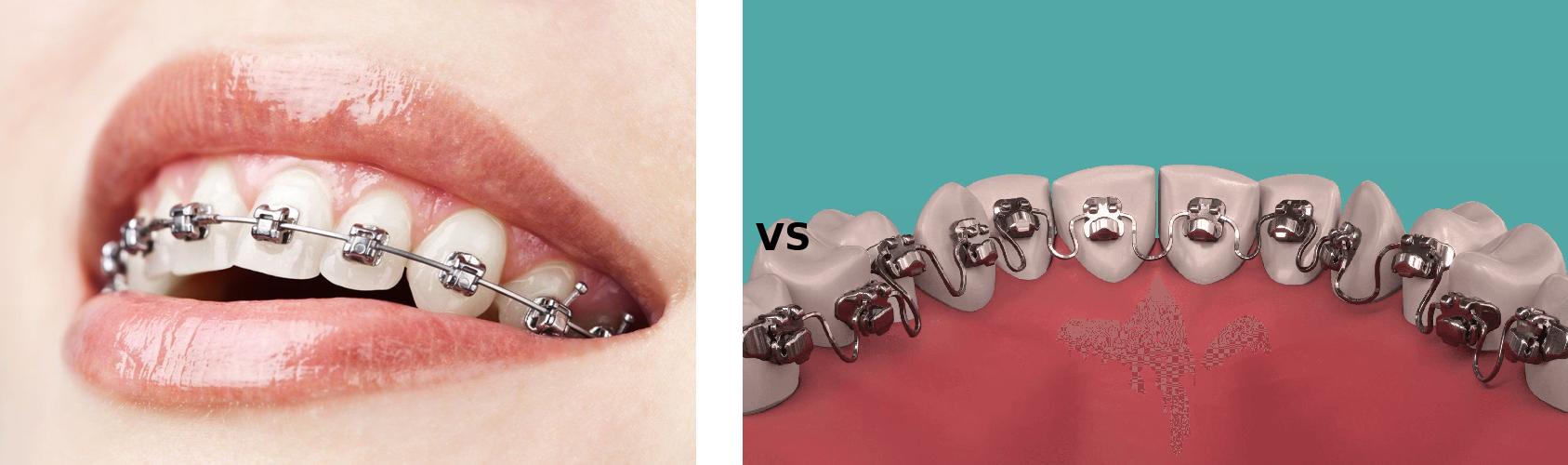
Traditional braces are brackets bonded to the front of each tooth and connected by a wire. They are the most versatile option, handling everything from simple crowding to complex bites with excellent control, and they are the most affordable. They also come in a less visible ceramic version for people who want the reliability of fixed braces with a lower profile. Because they work around the clock without any effort from you, they are often the best choice for kids, teens, and complex cases.
Lingual braces
Lingual braces are traditional braces mounted on the tongue side of your teeth, so they are essentially invisible from the front. For adults who want total discretion but need a fixed appliance, that is a real draw. The tradeoffs are meaningful, though: they cost more because they are custom-made, they take longer to get used to since the brackets sit against the tongue, and fewer orthodontists offer them. For many patients seeking discretion, clear aligners deliver a similar look-invisible result with fewer downsides.
Clear aligners
Clear aligners are removable, nearly invisible trays that shift the teeth in small steps. We use Angel Aligners as our system of choice, and Invisalign is available too. Because they come out for eating and brushing, there are no food restrictions and hygiene is easy. The catch is compliance: they only work when worn 20 to 22 hours a day, so they suit responsible teens and adults. For discretion without the tongue adjustment of lingual braces, aligners are often the sweet spot.
Cost and comfort compared
On cost, the usual order from lowest to highest is traditional metal braces, then clear aligners, then lingual braces. On comfort, clear aligners have no brackets to rub the cheeks, lingual braces can irritate the tongue at first, and traditional braces sit in between and are easily managed with wax. None of the three is truly painful; each just has its own short adjustment period. Whatever you choose, we quote it clearly and can spread the cost over interest-free monthly payments.
Which is right for you?
Here is how I sort it in the chair. If your case is complex or you want the best value, traditional braces are hard to beat. If you want discretion and will reliably wear a removable appliance, clear aligners usually win. If you specifically need a fixed appliance that is completely hidden and cost is not the deciding factor, lingual braces make sense. The honest truth is that most patients do beautifully with either braces or clear aligners, and we will tell you which fits your case at your consultation.
Frequently asked questions
Not sure which option fits you?
A free consultation gives you a real recommendation, not a sales pitch.
You may also be interested in these
Why families trust Elate Orthodontics
With over 1,000 five-star reviews across three locations, Elate Orthodontics is led by Dr. Kevin Baharvand, DMD, MS, a Diplomate of the American Board of Orthodontics, whose clinical work was recently selected for the cover of the American Journal of Orthodontics and Dentofacial Orthopedics, the most prestigious peer-reviewed journal in the field, and a national speaker on clear aligner treatment. Alongside Dr. Julia Kang, DMD, MS, both Boston University graduates and members of the Omicron Kappa Upsilon national honor society, our husband-and-wife team has been recognized as D Magazine Best Dentist 2026, Living Magazine Readers’ Choice 2026 Best Orthodontist in Frisco & Plano, Readers’ Choice Best Orthodontist in The Colony, Best New Business by the Chamber of Commerce, Nextdoor Neighborhood Favorite, and featured in Orthotown and Authority Magazine.
We serve families through three convenient offices in West Frisco, North Frisco, and The Colony, each staffed by the same trusted team, equipped with advanced technology, and committed to the personalized approach that consistently helps patients finish treatment sooner than expected. From braces and clear braces to Angel Aligners, we offer treatment for every age and every stage of life. We stay in-network with most insurance plans and offer flexible financing to make exceptional orthodontic care accessible for every family we serve.
Need general and family dentistry too? Our sister practice, Tribute Family Dentistry, provides dental care for all ages.