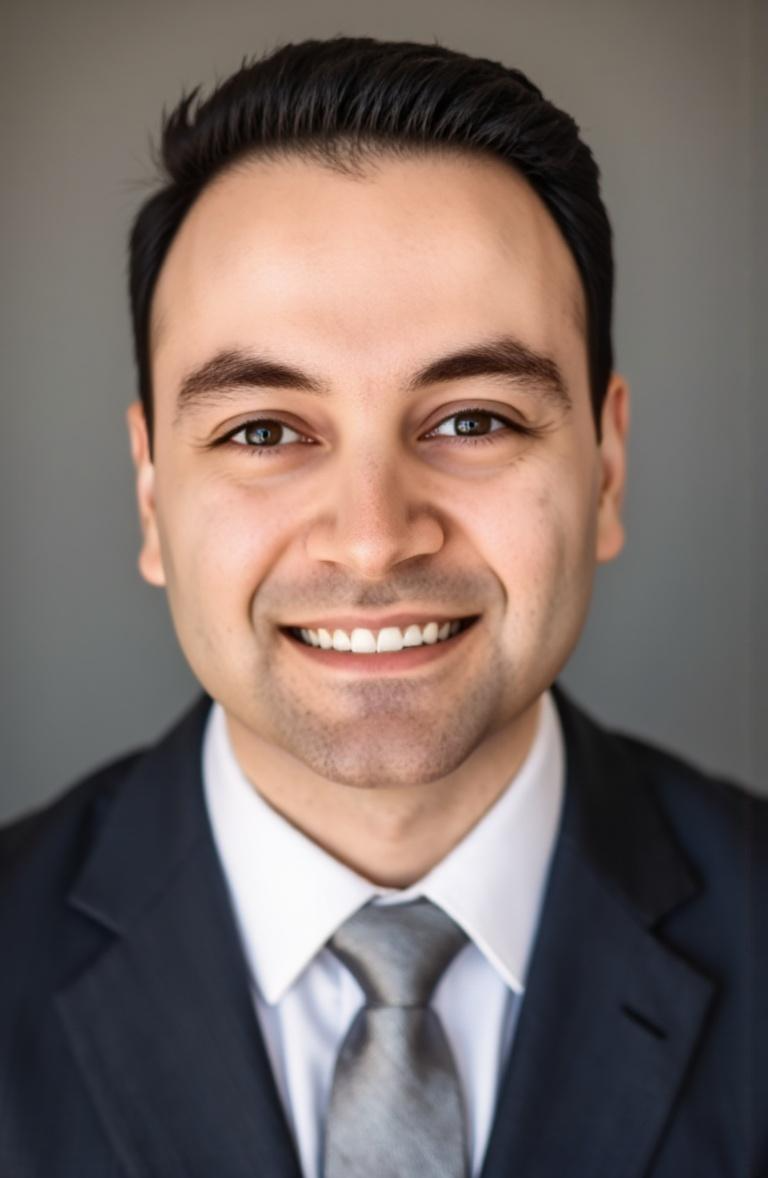



9 min read • By Dr. Kevin Baharvand, Diplomate, American Board of Orthodontics
SHORT ANSWER
Adults can absolutely get braces, and about one in three of our new patients is an adult. Most adult cases run 12 to 30 months depending on whether we are just straightening teeth or correcting a bite. In the Frisco market braces generally run $3,500 to $6,000 and aligners run higher, though at our offices aligners are priced the same as metal braces. The two things that actually change your plan as an adult are that your jaws have stopped growing and that any existing dental work has to be planned around.
ON THIS PAGE
More adults start treatment here than most people would guess. Roughly one in three of our new patients is an adult. Some are fixing a bite problem they have had since childhood and finally have the time and money to deal with. Some are getting ready for a wedding or a career change. A fair number had braces as teenagers, stopped wearing the retainer at some point in college, and watched their front teeth drift back over twenty years.
The questions adults ask are different from the ones teenagers ask, which is why this page exists separately from the traditional braces page and the Frisco location page. Teenagers want to know about colors. Adults want to know what it costs, how long it takes, and whether anyone at work will notice.
What is clinically different about treating adults
Your jaws have finished growing. That one fact changes three things, and most patients never get them explained before starting.
Teeth move more deliberately in denser bone
Bone density increases with age, so tooth movement is slower and requires different force levels. This is predictable, not a complication. Adult treatment is rarely dramatically longer than teen treatment for a comparable case, but it is not faster either. If someone quotes you a very short timeline for a complex adult case, ask them to explain how.
Braces cannot move jaws anymore
In a growing child we can guide how the jaws develop. In an adult we cannot. If your upper and lower jaws sit in genuinely different places, braces can camouflage that by tipping teeth to compensate, and for mild discrepancies that works well. For large ones it does not, and the honest answer is orthognathic surgery coordinated with an oral surgeon. I would rather tell you that at the consultation than eighteen months in.
Gum health is the gate, not age
Moving teeth through bone that is already losing attachment makes things worse. If there is active periodontal disease, that gets treated first and we start once it is stable. This is the actual limiting factor in adult orthodontics. Age by itself is not.
Your options, and how I actually choose between them
Four realistic paths for adults: metal braces, clear ceramic braces, and clear aligners, which for us means either Invisalign or Angel Aligners. Most people say Invisalign generically, but that is one brand of clear aligner among several.
Here is the part that surprises people. I do not think aligners are better than braces. They are different. Aligners win on appearance and on being able to take them out for a work dinner. Braces are typically more predictable for bite correction, rotating stubborn teeth, and closing larger spaces, because the force is on the tooth all day whether you cooperate or not. A fair number of our adult patients in professional roles pick metal braces once they realize the workplace reaction they were dreading mostly does not happen.
If you are choosing aligners specifically because you cannot commit to wearing something 22 hours a day, choose braces. Aligners in a drawer do nothing. This is the single most common reason adult aligner cases run long.
How long adult treatment takes
| Case type | Typical range | Notes |
|---|---|---|
| Front teeth only, bite already stable | 6 to 9 months | Limited treatment. Only appropriate when the bite genuinely does not need work. |
| Moderate crowding or spacing, full arch | 12 to 18 months | The most common adult case. Braces and aligners both handle it well. |
| Overbite, underbite, or crossbite | 18 to 30 months | Longer in adults because growth cannot help. Braces often outperform aligners here. |
| Relapse after teenage treatment | 6 to 18 months | Usually faster than the original case. |
| Surgical orthodontics | 24 to 36 months total | Pre-surgical alignment, surgery, then finishing. Uncommon, but sometimes the only correct answer. |
Any practice that hands you a firm timeline before examining your bite and looking at records is guessing. Ranges are honest. Promises are marketing.
What it costs in Frisco
Across the Frisco market, adult metal braces generally run about $3,500 to $6,000, and clear ceramic braces and aligners generally run about $4,000 to $6,500. Most practices charge a premium for aligners.
We price on case complexity instead of on which appliance you pick, so aligners cost the same as metal braces here. I did it that way because I did not want the appliance conversation to be a money conversation. You should choose based on what actually suits your case and your life.
Most of our adult patients land between $150 and $300 a month depending on the down payment and plan length. No credit check financing is available. Run the numbers yourself with the finance calculator.
Adult orthodontic coverage exists, but it varies more than any other part of dental insurance. Employer plans through Delta Dental, Cigna, Aetna, Blue Cross Blue Shield, and United Healthcare often include an orthodontic lifetime maximum somewhere around $1,000 to $2,500 that applies at any age, frequently paying 50% up to that cap. Whether adults are included at all comes down to your specific plan document, not the carrier.
Call the number on your card and ask two specific questions: does this plan cover orthodontic treatment for adults, and what is the lifetime orthodontic maximum. Those two answers tell you almost everything. We verify benefits before your consultation so you are not guessing.
Approval requires documentation of severe medical necessity. I would not plan around it.
Health savings and flexible spending accounts are the underused option. Orthodontic treatment is an eligible expense, and paying with pre-tax dollars is effectively a discount equal to your tax rate. If you have an FSA with a use-it-or-lose-it deadline, timing your start date around it is worth a conversation.
Crowns, implants, and gum health
This is the part that genuinely separates adult cases from teenage ones. By forty, most people have some dental work, and every piece of it affects the plan.
Crowns and veneers can be bracketed, though the bond to porcelain is less reliable than to enamel and we use a different adhesive. Expect a bracket on a crown to come loose more often. Implants are the bigger constraint. An implant is fused to the bone and simply will not move, so it becomes a fixed anchor point that the entire case has to be designed around. Sometimes that is useful. Sometimes it means a compromise. Either way I need to know about it before we plan anything.
Missing teeth, old bridges, and worn-down edges all matter too. If you are planning restorative work anyway, the sequence matters, and it is usually better to straighten first and restore afterward so your dentist is working with teeth in their final positions.
Frequently asked questions
Am I too old for braces?
No. I have treated patients in their sixties and seventies. Bone responds to orthodontic force throughout life. What actually matters is gum and bone health, not the number on your birth certificate. If you have active periodontal disease we treat that first, then we start.
Do adult braces hurt more than they do for teenagers?
Slightly, and mostly in the first few days after placement or after an adjustment. Adult bone is denser, so the pressure registers more. It settles within about three to five days. Most adults describe it as soreness when biting rather than pain.
Can I get clear aligners instead so nobody notices?
Usually yes, and at our offices the price is the same either way. But aligners are not automatically the better choice. For bite correction in adults, braces often finish the case more predictably. Worth noting: most people say Invisalign, but that is one brand of clear aligner. We also use Angel Aligners.
Will braces damage my existing crowns, veneers, or implants?
Crowns and veneers can be bonded to, though brackets sometimes need a different adhesive and the bond is less reliable. Implants are the real constraint. An implant is fused to bone and will not move, so it becomes a fixed anchor we have to plan the whole case around. Tell us about every implant at the consultation.
I had braces as a teenager and my teeth shifted. Do I need full treatment again?
Usually not. Most adult relapse is moderate shifting rather than a return to the original problem, and re-treatment tends to run faster than the first time. Limited treatment of 6 to 12 months resolves a lot of these cases.
How often will I need to come in?
Braces run about every 6 to 8 weeks. Aligners are closer to every 8 to 10 weeks since you change trays at home. We have two Frisco offices, so you can pick whichever is easier that week.
Find out what your case actually needs
Consultations are free, and you will leave knowing your options, your timeline, and your number. Two Frisco offices plus The Colony.
You may also be interested in these
- Clear Aligners vs Invisalign: What Is Actually Different
- Palate Expansion in Adults: Is It Possible?
- Is Invisalign Worth It? A Complete Guide
Why families trust Elate Orthodontics
1,000+ five-star reviews • 3 offices (two in Frisco, one in The Colony) • D Magazine Best Dentist 2026 • Living Magazine Readers’ Choice 2026
With over 1,000 five-star reviews across three locations, Elate Orthodontics is led by Dr. Kevin Baharvand, DMD, MS, a Diplomate of the American Board of Orthodontics, whose clinical work was recently selected for the cover of the American Journal of Orthodontics and Dentofacial Orthopedics, the most prestigious peer-reviewed journal in the field, and a national speaker on clear aligner treatment. Alongside Dr. Julia Kang, DMD, MS, both Boston University graduates and members of the Omicron Kappa Upsilon national honor society, our husband-and-wife team has been recognized as D Magazine Best Dentist 2026, Living Magazine Readers’ Choice 2026 Best Orthodontist in Frisco & Plano, Readers’ Choice Best Orthodontist in The Colony, Best New Business by the Chamber of Commerce, Nextdoor Neighborhood Favorite, and featured in Orthotown and Authority Magazine.
We serve families through three convenient offices in West Frisco, North Frisco, and The Colony, each staffed by the same trusted team, equipped with advanced technology, and committed to the personalized approach that consistently helps patients finish treatment sooner than expected. From braces and clear braces to Angel Aligners, we offer treatment for every age and every stage of life. We stay in-network with most insurance plans and offer flexible financing to make exceptional orthodontic care accessible for every family we serve.
Need general and family dentistry too? Our sister practice, Tribute Family Dentistry, provides dental care for all ages.
Book a free consultation: 972.538.4343
About the author
Dr. Kevin Baharvand, DMD, MS, is a Diplomate of the American Board of Orthodontics and a national speaker on clear aligner treatment. He practices at Elate Orthodontics in West Frisco, North Frisco, and The Colony, Texas.