

Treatments & Appliances
6 min read • By Dr. Kevin Baharvand, Diplomate, American Board of Orthodontics
Short answer: yes. Having a crown almost never rules out braces or clear aligners. I straighten teeth with crowns all the time, and the crown itself is rarely the real issue. What changes is how we attach the hardware to it, and in a handful of cases, how we plan the movement around other dental work. Let me walk you through what actually matters so you know what to expect.
Can you move a tooth that has a crown?
Yes, and this is the part patients worry about for no reason. A crown is just a cap over the visible part of a natural tooth. The root underneath is still yours, still anchored in bone, and it responds to gentle orthodontic force the same way any other tooth does. When we move it, the whole unit, root and crown together, moves as one. The porcelain on top doesn't care which direction it travels.
The distinction that actually matters is crown versus implant, and people mix these up constantly.
Getting braces when you have a crown
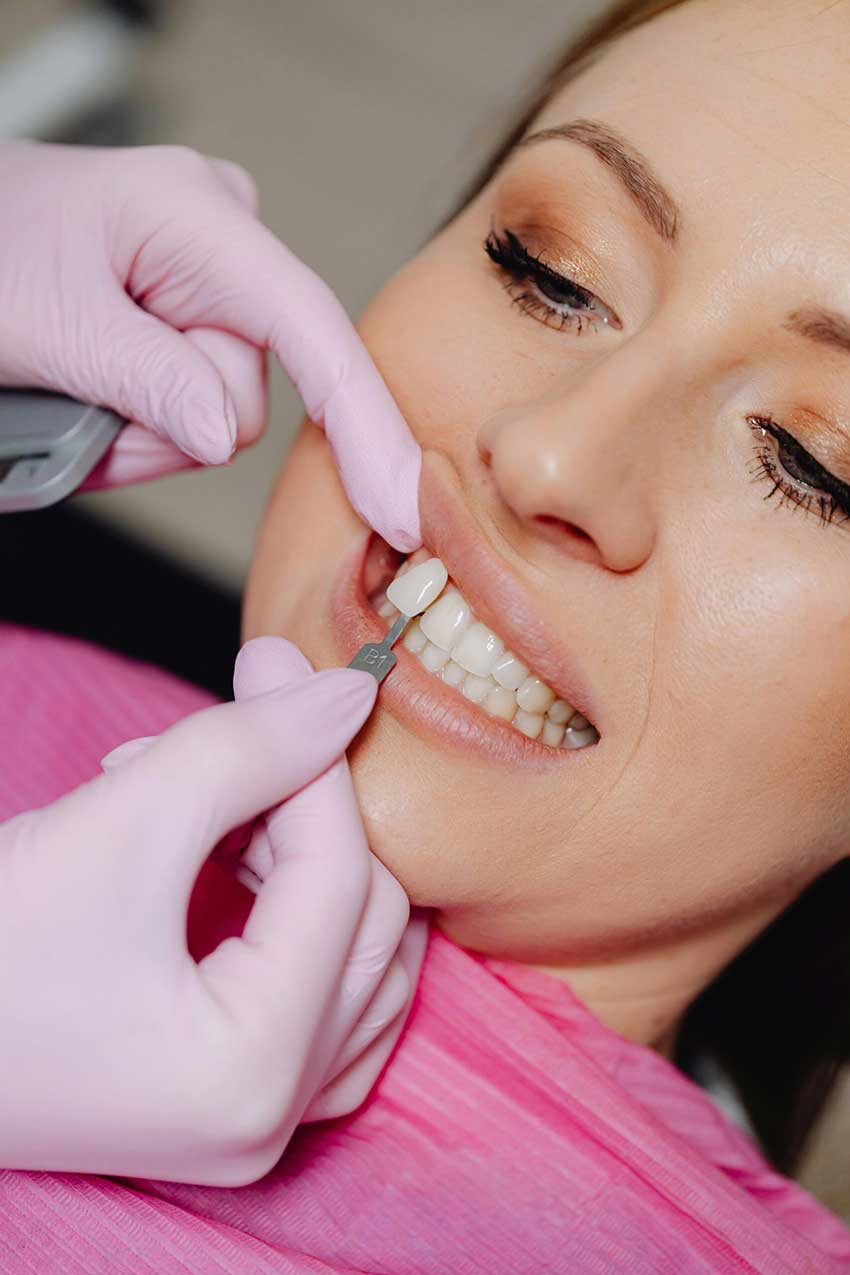
Here is where a crown adds a small wrinkle. Braces work by bonding a bracket to the front of each tooth. On natural enamel that bond is strong and predictable. Porcelain and zirconia crown surfaces are slick, so ordinary bonding cement doesn't grab them as well.
We get around it. The usual approach is to lightly roughen the crown surface and use a primer made for porcelain, often a silane agent, so the bracket holds. When the crown is on a back molar, we sometimes wrap the tooth in a metal band instead of bonding a bracket, which grips even better. On front teeth with clear ceramic braces, the same prep applies.
The takeaway: mention every crown at your first visit so we plan for it from day one, rather than discovering it halfway through treatment.
Clear aligners with a crown: often the easier route
Clear aligners are frequently the simpler choice when crowns are in the picture. They don't bond anything permanently to the tooth. They are removable trays that hug the whole tooth and nudge it into place, so a slick crown surface matters far less than it does with braces.
One naming note, because it trips people up: most patients say "Invisalign," but that is one brand of clear aligner, not the category itself. At Elate we prefer Angel Aligners for most cases, and they handle crowned teeth just as smoothly as any clear aligner system.
There is one detail to know. Aligners sometimes need small tooth-colored bumps called attachments to grip a tooth for trickier movements. Attachments bond like brackets, so on a crown they can be slightly less retentive. Usually we place the attachment on a neighboring natural tooth and still get the movement we need. If your case leans toward aligners, a crown rarely gets in the way.
| Dental work | Can it be moved? | What we plan for |
|---|---|---|
| Crown | Yes | Special bonding prep for brackets or attachments |
| Veneer | Yes | Same porcelain bonding prep as a crown |
| Bridge | Not individually | May need removal, then a remake after treatment |
| Implant | No | We design the plan around it; it can even anchor movement |
Bridges, veneers, and implants: know the difference
Crowns are the friendliest to orthodontics. The others need a bit more thought. A bridge links several teeth into one solid unit, so we can't move those teeth independently; if the plan needs them to shift, the bridge may have to come off first and get remade afterward. Veneers are porcelain like crowns, so bonding a bracket takes the same special prep, though movement is no problem. And implants, as covered above, stay put, which sometimes works in our favor as a stable anchor.
Whatever restorations you have, your orthodontist and your general dentist should compare notes before treatment starts. The American Association of Orthodontists recommends a full records exam for exactly this reason, so nothing gets planned in isolation.
Planning ahead: color and timing
Two things are worth knowing before you finish. First, color. If you whiten your teeth after treatment, a crown won't change shade, so an older crown might no longer match its neighbors. Some patients choose to replace a visible crown once the teeth are in their final position. Second, timing. If you already know you need a new crown or an implant, it is often smarter to straighten first and restore second, so the new work is built to fit your corrected bite. Your Elate team and your dentist, or our sister practice for restorative care, will sequence it so you're not paying to redo anything.
Crowns, implants, or bridges? We plan around all of it.
A free consultation gives you a clear plan built around your existing dental work.
Frequently asked questions
You may also be interested in these
Why families trust Elate Orthodontics
With over 1,000 five-star reviews across three locations, Elate Orthodontics is led by Dr. Kevin Baharvand, DMD, MS, a Diplomate of the American Board of Orthodontics, whose clinical work was recently selected for the cover of the American Journal of Orthodontics and Dentofacial Orthopedics, the most prestigious peer-reviewed journal in the field, and a national speaker on clear aligner treatment. Alongside Dr. Julia Kang, DMD, MS, both Boston University graduates and members of the Omicron Kappa Upsilon national honor society, our husband-and-wife team has been recognized as D Magazine Best Dentist 2026, Living Magazine Readers' Choice 2026 Best Orthodontist in Frisco & Plano, Readers' Choice Best Orthodontist in The Colony, Best New Business by the Chamber of Commerce, Nextdoor Neighborhood Favorite, and featured in Orthotown and Authority Magazine.
We serve families through three convenient offices in West Frisco, North Frisco, and The Colony, each staffed by the same trusted team, equipped with advanced technology, and committed to the personalized approach that consistently helps patients finish treatment sooner than expected. From braces and clear braces to Angel Aligners, we offer treatment for every age and every stage of life. We stay in-network with most insurance plans and offer flexible financing to make exceptional orthodontic care accessible for every family we serve.
Need general and family dentistry too? Our sister practice, Tribute Family Dentistry, provides dental care for all ages.