

6 min read · By Dr. Kevin Baharvand, Diplomate, American Board of Orthodontics
Quick answer
A mesiodens is an extra tooth that forms between the upper front teeth. It is the most common supernumerary tooth, usually spotted in children between ages 5 and 8 on a routine X-ray. Left in place, it can block the permanent front teeth from coming in, open a gap, or crowd the area. Treatment is often a minor surgical removal, sometimes followed by braces to guide the front teeth into place. Some small, harmless ones are simply monitored.
On this page
What a mesiodens actually is
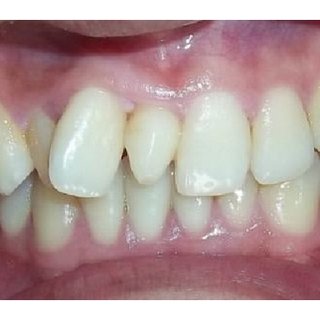
Most of us grow a set number of teeth. Occasionally the body makes an extra one, and when that spare shows up in the midline of the upper jaw, right between or behind the two front teeth, it is called a mesiodens. It is the single most common of the extra (supernumerary) teeth we see.
A mesiodens often looks different from a normal tooth. It tends to be smaller and cone-shaped, and it does not always erupt the way a regular tooth would. Some point downward into the mouth, but many angle up into the bone and stay hidden, which is why plenty are discovered only on an X-ray.
What causes it
The honest answer is that the precise cause is not fully understood. What we do know is that it is developmental. During the formation of the teeth, the tissue that produces tooth buds makes one more than it should. There is a genetic thread too, so it can run in families. It is more common in boys than girls, and it is occasionally linked to certain syndromes, though most cases occur in otherwise perfectly healthy kids.
The takeaway for parents: a mesiodens is not the result of anything you did. It is a quirk of development, and a very manageable one.
Why it matters
An extra tooth in that spot is not just cosmetic. Sitting where it does, a mesiodens can cause real problems for the permanent front teeth trying to come in behind it:
- Blocked eruption. It can physically stop a permanent incisor from erupting, leaving an impacted tooth stuck in the bone.
- A gap. It can force the front teeth apart, creating a midline gap (diastema).
- Crowding or crooked teeth. It can push neighboring teeth off course, leading to crowding.
- Cysts. Less commonly, a retained extra tooth can develop a cyst around it over time.
None of this is an emergency, but it is the reason we do not just ignore one. Catching it early usually means a simpler fix.
How a mesiodens is diagnosed
Because so many never erupt, a mesiodens is often invisible to the naked eye. It usually turns up on a routine dental X-ray, sometimes as the explanation for a front tooth that is late to arrive or a stubborn gap. When we need a clearer picture of exactly where it sits and how it relates to the roots nearby, a 3D cone-beam scan maps it precisely, which makes any removal safer and more predictable.
This is one more argument for an early orthodontic check. The American Association of Orthodontists recommends a first evaluation by age 7, right in the window when a hidden extra tooth would otherwise start causing trouble. Spotting it then, before the permanent teeth are fully committed to their path, is far easier than untangling the problem later.
Treatment options
Treatment is not one-size-fits-all. It depends on where the tooth is, whether it is causing problems, and how the permanent teeth are developing.
| Approach | When it is used |
|---|---|
| Monitoring | The tooth is small, out of the way, and causing no problems; we watch it with periodic imaging |
| Surgical removal | It is blocking teeth, causing a gap or crowding, or at risk of a cyst; usually a minor procedure |
| Removal plus orthodontics | A blocked or displaced permanent tooth needs guiding in, or a gap needs closing after removal |
When braces are part of the plan, the goal is usually to coax a held-back front tooth into place or to close the space the extra tooth created. In many straightforward cases, once the mesiodens is out of the way, the permanent teeth find their own path with little or no further help.
A mesiodens sounds alarming and rarely is. The important move is simple: image it, understand it, and decide with an orthodontist whether to remove it now or watch it. Early attention keeps the fix small.
If a dentist has mentioned an extra tooth on your child’s X-ray, or a front tooth is oddly late or crooked, come in and let us take a proper look. We will show you exactly what is going on and lay out the least-invasive way to handle it.
Spotted an extra tooth on your child’s X-ray?
We can tell you whether it needs removing now, later, or not at all, and guide the front teeth in cleanly. Your first visit is free.
Frequently asked questions
What exactly is a mesiodens?
A mesiodens is an extra tooth that develops in the midline of the upper jaw, right around the two front teeth. It is the most common type of supernumerary (extra) tooth. It is often smaller and cone-shaped, and it can sit behind the front teeth or point up into the bone rather than erupting normally.
What causes a child to have an extra tooth?
The exact cause is not fully known, but it is largely developmental and tends to run in families. It happens when the tooth-forming tissue produces one more tooth bud than it should. It is not caused by anything a parent did or did not do.
Does a mesiodens always need to be removed?
Not always, but often. If it is blocking the permanent front teeth, causing a gap, or crowding the area, removal is usually recommended. If it is small, well out of the way, and causing no trouble, an orthodontist may choose to monitor it instead. Imaging guides the call.
When is the best age to treat it?
It is frequently caught between ages 5 and 8, when the front adult teeth are due to come in. Treating it in that window often prevents bigger problems, because we can clear the path before the permanent teeth get blocked or pushed off course.
Is removing a mesiodens a big procedure?
Usually it is a straightforward minor oral surgery, often done with local anesthesia. Recovery is typically quick. If the extra tooth is impacted high in the bone, the procedure is a bit more involved, which is exactly why imaging beforehand matters.
Will my child need braces afterward?
Sometimes. If the mesiodens caused a gap, crowding, or held back a front tooth, orthodontic treatment may be needed to close the space or coax the blocked tooth into position. In simpler cases, the teeth erupt on their own once the extra tooth is gone.
You may also be interested in these
Why families trust Elate Orthodontics
1,000+ five-star reviews · 3 offices (two in Frisco, one in The Colony) · D Magazine Best Dentist 2026 · Living Magazine Readers’ Choice 2026
With over 1,000 five-star reviews across three locations, Elate Orthodontics is led by Dr. Kevin Baharvand, DMD, MS, a Diplomate of the American Board of Orthodontics, whose clinical work was recently selected for the cover of the American Journal of Orthodontics and Dentofacial Orthopedics, the most prestigious peer-reviewed journal in the field, and a national speaker on clear aligner treatment. Alongside Dr. Julia Kang, DMD, MS, both Boston University graduates and members of the Omicron Kappa Upsilon national honor society, our husband-and-wife team has been recognized as D Magazine Best Dentist 2026, Living Magazine Readers’ Choice 2026 Best Orthodontist in Frisco & Plano, Readers’ Choice Best Orthodontist in The Colony, Best New Business by the Chamber of Commerce, Nextdoor Neighborhood Favorite, and featured in Orthotown and Authority Magazine.
We serve families through three convenient offices in West Frisco, North Frisco, and The Colony, each staffed by the same trusted team, equipped with advanced technology, and committed to the personalized approach that consistently helps patients finish treatment sooner than expected. From braces and clear braces to Angel Aligners, we offer treatment for every age and every stage of life. We stay in-network with most insurance plans and offer flexible financing to make exceptional orthodontic care accessible for every family we serve.
Need general and family dentistry too? Our sister practice, Tribute Family Dentistry, provides dental care for all ages.
West Frisco
North Frisco
The Colony
Book a free consultation: 972.538.4343
About the author
Dr. Kevin Baharvand, DMD, MS, is a Diplomate of the American Board of Orthodontics and a national speaker on clear aligner treatment. He practices alongside Dr. Julia Kang at Elate Orthodontics’ three North Texas offices in West Frisco, North Frisco, and The Colony. Meet Dr. B →