

6 min read • By Dr. Kevin Baharvand, Diplomate, American Board of Orthodontics • Kids & Early Treatment
If your child’s dentist mentioned a palate expander, or you have seen “expander” on an orthodontic treatment plan, it is natural to have questions. It looks like a small metal device, it is worn in the roof of the mouth, and it does something that surprises a lot of parents: it gently widens the upper jaw itself. Here is what an expander actually does, why some kids need one, and what the experience is really like.
What it isWhy kids need oneHow it worksDoes it hurt?The right ageLife with an expanderWhy early mattersFAQ
What a palate expander is
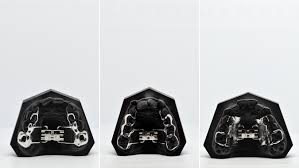
A palate expander is a custom device that attaches to the upper back teeth and sits against the roof of the mouth. In the middle is a small screw. Turning that screw a tiny amount each day, with a special key we send home, places gentle outward pressure on the two halves of the upper jaw. Because a child’s palate is still developing, that pressure gradually moves the halves apart and new bone fills in the gap. The result is a wider upper arch with more room in it.
Why some kids need one
Not every child needs an expander, but for some it solves a problem that would otherwise get harder to fix. Common reasons we recommend one include:
- A crossbite, where the upper teeth bite inside the lowers because the upper jaw is too narrow
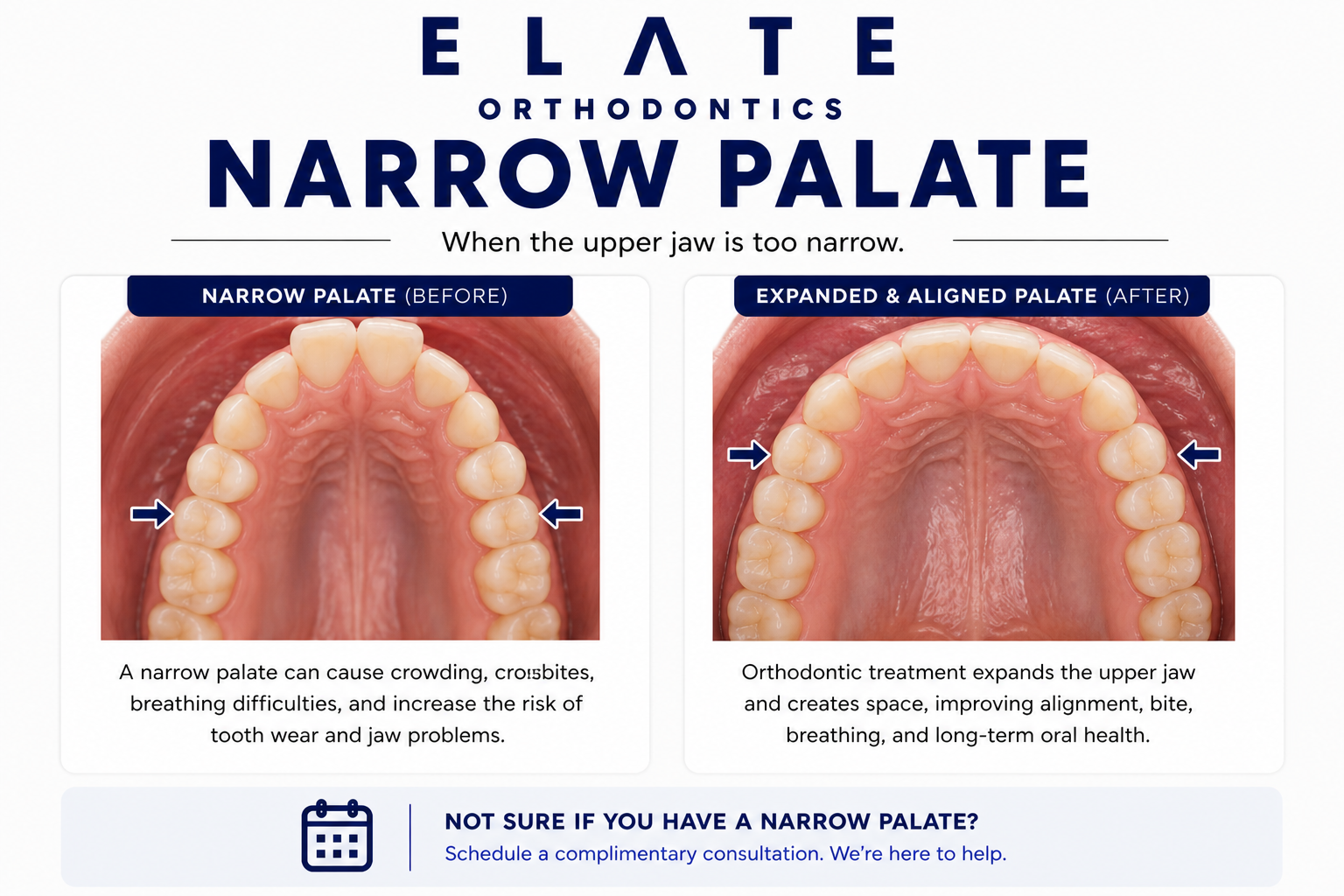
- A narrow palate with not enough room, leading to crowded teeth
- Impacted teeth that have no space to come in
- Chronic mouth breathing tied to a narrow arch, which connects to our airway orthodontics approach
How it works
The magic is timing. In children, the upper jaw is actually two bones joined by a growth plate down the middle of the palate that does not fully fuse until the mid-teens. While that plate is open, gentle daily pressure separates the halves a fraction of a millimeter at a time, and the body lays down new bone to fill the space. This is why expansion in a child is a slow, comfortable, non-surgical process, while the same widening in an adult usually requires surgery.
Does it hurt?
This is the question every parent asks, and the honest answer is no, it should not hurt. After each turn of the screw, most kids feel a few minutes of pressure or tingling behind the nose and even up toward the eyes, which fades quickly. The first few days can feel a little sore, similar to the tightness after braces are adjusted, and over-the-counter pain relief handles it easily. Within a week almost every child forgets it is there.
The right age and timing
Expanders work best roughly between ages 7 and 11, while the palate is still two halves. That window is exactly why the American Association of Orthodontists recommends a first orthodontic checkup by age 7. Even if nothing needs to be done yet, that visit lets us watch the jaw develop and step in at the ideal moment if an expander is going to help. Wait too long and a simple childhood expander can turn into a surgical procedure in the teens or twenties.
Living with an expander
There is a short adjustment period, and then it becomes routine. In the first few days your child may have a slight lisp and a bit more saliva as the tongue gets used to the device; both settle fast, and practicing reading aloud helps. Food-wise, the same rules as braces apply: skip sticky and hard foods that could damage the appliance. Cleaning matters too, since food can collect around it, so we show every family how to rinse and brush around the expander to keep it fresh.
Why early expansion can avoid bigger problems
An expander is one of the clearest examples of why early orthodontic evaluation pays off. Creating room while a child is growing can prevent or simplify later crowding, reduce the need for extractions, correct a bite before it affects jaw growth, and in airway-related cases support better nasal breathing. It is a small, well-timed step that can save a much larger one down the road. Our pediatric orthodontics team is built around catching exactly these opportunities.
Frequently asked questions
Wondering if your child needs an expander?
A free evaluation tells you whether early treatment would help, or whether to simply keep an eye on things.
You may also be interested in these
Why families trust Elate Orthodontics
With over 1,000 five-star reviews across three locations, Elate Orthodontics is led by Dr. Kevin Baharvand, DMD, MS, a Diplomate of the American Board of Orthodontics, whose clinical work was recently selected for the cover of the American Journal of Orthodontics and Dentofacial Orthopedics, the most prestigious peer-reviewed journal in the field, and a national speaker on clear aligner treatment. Alongside Dr. Julia Kang, DMD, MS, both Boston University graduates and members of the Omicron Kappa Upsilon national honor society, our husband-and-wife team has been recognized as D Magazine Best Dentist 2026, Living Magazine Readers’ Choice 2026 Best Orthodontist in Frisco & Plano, Readers’ Choice Best Orthodontist in The Colony, Best New Business by the Chamber of Commerce, Nextdoor Neighborhood Favorite, and featured in Orthotown and Authority Magazine.
We serve families through three convenient offices in West Frisco, North Frisco, and The Colony, each staffed by the same trusted team, equipped with advanced technology, and committed to the personalized approach that consistently helps patients finish treatment sooner than expected. From braces and clear braces to Angel Aligners, we offer treatment for every age and every stage of life. We stay in-network with most insurance plans and offer flexible financing to make exceptional orthodontic care accessible for every family we serve.
Need general and family dentistry too? Our sister practice, Tribute Family Dentistry, provides dental care for all ages.