

Bite & Alignment Issues
6 min read • By Dr. Kevin Baharvand, Diplomate, American Board of Orthodontics
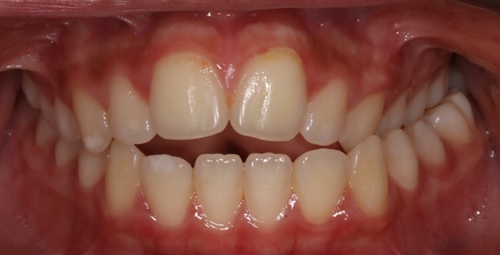
A crossbite is one of those bite problems that's easy to overlook and important not to. When the upper and lower teeth don't line up the way they should, it can quietly wear teeth down, shift the jaw, and, in kids, even steer how the jaw grows. The upside: it's very fixable, and often simplest to treat early. Here's what a crossbite actually is and how we correct it.
What is a crossbite?
Normally, when you bite down, your upper teeth rest slightly outside your lower teeth, like a lid sitting over a box. In a crossbite, that relationship is reversed for one or more teeth: an upper tooth tucks inside its lower partner. It can be a single tooth or a whole segment. You'll find more detail on our crossbite page.
The two main types
| Type | What it looks like |
|---|---|
| Anterior crossbite | Front upper teeth bite behind the lower front teeth |
| Posterior crossbite | Back upper teeth sit inside the lower back teeth, often from a narrow upper jaw |
Either type can occur on one side or both. A posterior crossbite on just one side often makes the jaw shift to that side to find a comfortable bite, which is part of why we like to catch it early.
Causes and why it matters
Crossbites usually trace back to genetics, a narrow upper jaw, delayed or unusual eruption of teeth, or long-term habits like thumb-sucking and mouth breathing that affect jaw development. Left untreated, a crossbite can cause uneven tooth wear, gum recession on the affected teeth, a jaw that shifts and looks asymmetric, and added strain that can feed into jaw joint problems. In a growing child, an uncorrected crossbite can even nudge the jaw to develop unevenly, which is exactly why early evaluation pays off.
How a crossbite is fixed
Treatment depends on the type and the patient's age. In children, a narrow upper jaw responds beautifully to a palate expander, which gently widens the jaw while it's still growing to create a normal bite, this is a big reason we recommend an early orthodontic check. For teens and adults, braces or clear aligners move the teeth into proper alignment, sometimes with elastics to guide the bite. Rare, severe skeletal crossbites in adults may need a combination of orthodontics and jaw surgery, but that's the exception, not the rule. An exam and X-rays tell us which approach fits.
Think you or your child has a crossbite?
Catching it early keeps treatment simple. Start with a free consultation.
Frequently asked questions
You may also be interested in these
Why families trust Elate Orthodontics
With over 1,000 five-star reviews across three locations, Elate Orthodontics is led by Dr. Kevin Baharvand, DMD, MS, a Diplomate of the American Board of Orthodontics, whose clinical work was recently selected for the cover of the American Journal of Orthodontics and Dentofacial Orthopedics, the most prestigious peer-reviewed journal in the field, and a national speaker on clear aligner treatment. Alongside Dr. Julia Kang, DMD, MS, both Boston University graduates and members of the Omicron Kappa Upsilon national honor society, our husband-and-wife team has been recognized as D Magazine Best Dentist 2026, Living Magazine Readers' Choice 2026 Best Orthodontist in Frisco & Plano, Readers' Choice Best Orthodontist in The Colony, Best New Business by the Chamber of Commerce, Nextdoor Neighborhood Favorite, and featured in Orthotown and Authority Magazine.
We serve families through three convenient offices in West Frisco, North Frisco, and The Colony, each staffed by the same trusted team, equipped with advanced technology, and committed to the personalized approach that consistently helps patients finish treatment sooner than expected. From braces and clear braces to Angel Aligners, we offer treatment for every age and every stage of life. We stay in-network with most insurance plans and offer flexible financing to make exceptional orthodontic care accessible for every family we serve.
Need general and family dentistry too? Our sister practice, Tribute Family Dentistry, provides dental care for all ages.