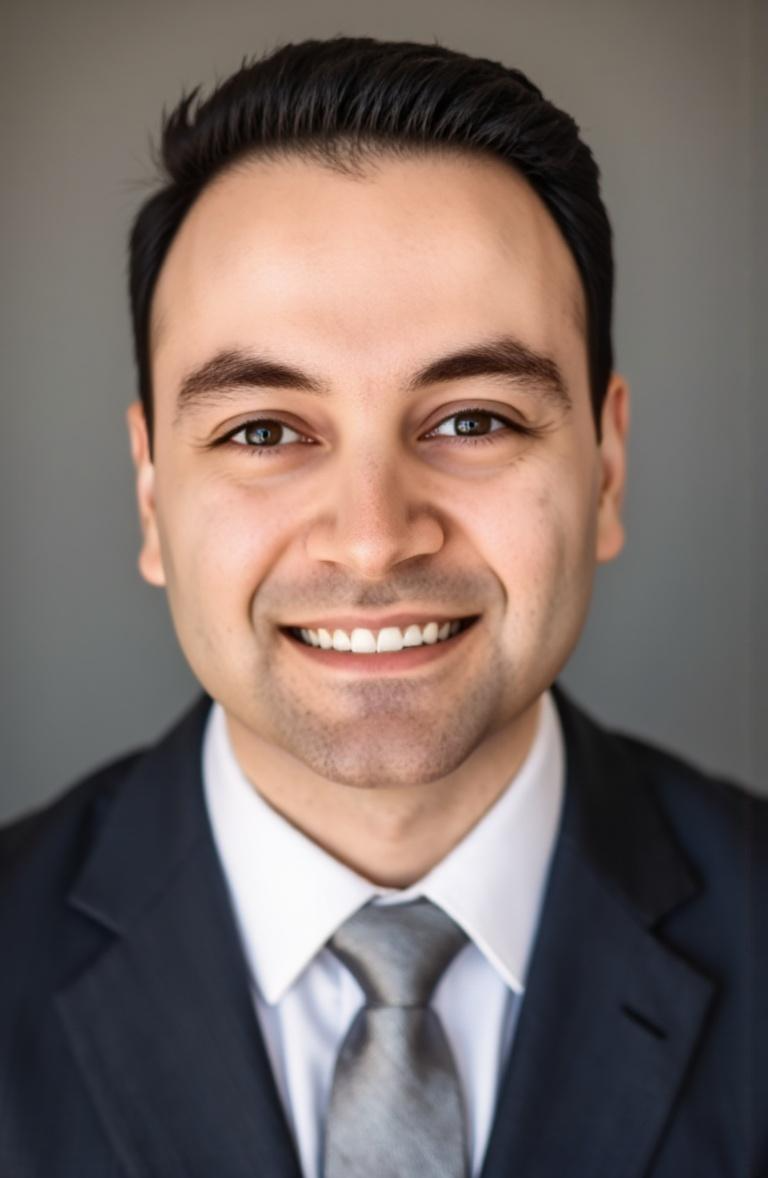


6 min read • By Dr. Kevin Baharvand, Diplomate, American Board of Orthodontics
SHORT ANSWER
Two facts about an orthodontic office are genuinely useful and almost never appear on review sites: who owns the practice, and whether the doctor is certified by the American Board of Orthodontics. Both are checkable in about ten minutes. Board certification you can verify directly with the board itself, which is the authoritative source. Ownership is a question you ask at the consultation, and the speed of the answer tells you as much as the answer does. A directory can shortcut the shortlist, but verify anything that matters at the primary source.
ON THIS PAGE
What review sites do not tell you
Search for an orthodontist in Frisco and you get a wall of five star averages that are almost indistinguishable from one another. Reviews are useful, but for a narrow thing: how the office runs. Wait times, staff, billing, whether a broken bracket gets handled the same week. Those matter over a two year treatment.
What reviews cannot tell you is clinical quality, because patients cannot evaluate their own orthodontic result. Nobody knows whether their roots ended up parallel. So the five star average is real information about the front desk and almost no information about the orthodontics.
Two things that are checkable, and that correlate with the parts you cannot see, are who owns the practice and whether the doctor pursued board certification. Neither is a guarantee. Both are more informative than a star rating.
Checking ownership
Consolidation has changed dentistry considerably. Many practices that still carry a doctor’s name on the sign are owned by larger groups, with the named doctor working under a transition agreement. That is legal, common, and not by itself a problem.
It matters because contracts turn over faster than treatment does. A child starting early treatment at eight can outlast two employment agreements, and every handoff loses some of the reasoning behind the plan. I wrote about why continuity matters in more depth, including the fair case for group ownership.
There is no public database of dental practice ownership, so the reliable method is direct: ask whether the doctor owns the practice and how long they have been at that location. It is a normal question. Owners answer it in about a second.
I own my practice, so I have an obvious stake in this argument and you should weigh it accordingly. The fair version is that ownership predicts stability, not quality. A well run group practice with a doctor who has been there a decade beats a solo owner about to retire.
Verifying board certification
Certification by the American Board of Orthodontics means submitting completed cases for examination by other orthodontists against a defined standard. It is voluntary and only a minority of orthodontists complete it. What it signals is a willingness to have finished work graded by people who know exactly what to look for.
The authoritative way to check is the board’s own public directory of Diplomates, on their website. Not a third party listing, not the practice’s about page. Certification also requires periodic renewal, so a directory that has not been updated recently can be wrong in either direction.
| What to check | Where | What it tells you |
|---|---|---|
| Orthodontic residency | The practice bio page | The most fundamental credential. In Texas a general dentist can do orthodontics without one. |
| Board certification | American Board of Orthodontics directory | Voluntary peer review of finished cases. A strong positive signal. |
| Active license | Texas State Board of Dental Examiners | Licensure status and any disciplinary history. |
| Ownership | Ask directly | No public database exists. The answer, and how fast it comes, are both informative. |
One wording trap on group practice websites. When several doctors are listed and the page says board certified without attaching it to a name, check each bio individually. Certification belongs to a person, never to a practice.
Using directories without over-trusting them
A directory called theorthodontistnearme.com surfaces both of these facts, ownership and board certification, which most listing sites do not. That is genuinely more useful than another star rating, and it is the reason it is worth mentioning here.
I should be straightforward though: our practice is exactly the profile that directory was built to surface, privately owned and doctor-led with a Diplomate in the chair. So I am not a neutral party recommending it, and you should read it the same way you would read any listing that happens to rank the recommender favorably.
The sensible use of any directory is to generate a shortlist quickly, then verify what matters at the source and judge the office in person. Every directory encodes somebody’s criteria. Knowing that is enough.
The ten minute version
- Open the bio page and confirm an accredited orthodontic residency, not just dental school.
- Check the name in the American Board of Orthodontics directory if certification matters to you.
- Check licensure with the Texas State Board of Dental Examiners.
- Read the negative reviews and, more importantly, the office’s responses to them.
- At the consultation, ask whether the doctor owns the practice and how long they have been there.
That is the whole exercise. It takes about as long as reading three reviews and tells you considerably more.
Verify credentials at the source, not at whichever site is telling you about them. Including this one.
Frequently asked questions
How do I verify board certification independently?
The American Board of Orthodontics maintains a public directory of Diplomates on its own website. That is the authoritative source. Any third party listing, including a directory, is only as current as its last update, so check the board itself if it matters to you.
Is a practice worse because it is corporate owned?
Not inherently, and I would not claim otherwise. Some group-owned offices employ excellent orthodontists and run well. Ownership predicts turnover, and turnover matters because treatment lasts years. That is the honest version of the argument.
How do I find out who owns a practice?
Ask at the consultation. Is this doctor an owner or an associate, and how long have they been here. Owners answer instantly. You can also check the Texas State Board of Dental Examiners for licensure, though it will not tell you the ownership structure.
Does board certification mean better treatment?
It means the orthodontist submitted finished cases for peer review and passed an examination, voluntarily. It is a meaningful signal of accountability. It is not a guarantee, and many excellent orthodontists never pursued it. Treat it as a positive, not a filter.
Are directories trustworthy?
Use them to generate a shortlist, not to make the decision. Any directory has criteria, and those criteria come from somewhere. Verify anything that matters against the primary source, then judge the office at the consultation.
What if my orthodontist is not board certified?
That alone is not a reason to leave. Look at whether they completed an accredited orthodontic residency, which is the more fundamental credential, and at how they explain your case. A residency-trained orthodontist who communicates clearly is in good shape.
Ask us any of these questions
Privately owned, doctor-led, and happy to answer the ownership question directly. Two Frisco offices plus The Colony.
You may also be interested in these
- Who Finishes Your Case? Why Continuity Matters
- How to Vet an Orthodontist Before You Book
- Orthodontist vs Dentist: Why It Should Be Left to the Experts
Why families trust Elate Orthodontics
1,000+ five-star reviews • 3 offices (two in Frisco, one in The Colony) • D Magazine Best Dentist 2026 • Living Magazine Readers’ Choice 2026
With over 1,000 five-star reviews across three locations, Elate Orthodontics is led by Dr. Kevin Baharvand, DMD, MS, a Diplomate of the American Board of Orthodontics, whose clinical work was recently selected for the cover of the American Journal of Orthodontics and Dentofacial Orthopedics, the most prestigious peer-reviewed journal in the field, and a national speaker on clear aligner treatment. Alongside Dr. Julia Kang, DMD, MS, both Boston University graduates and members of the Omicron Kappa Upsilon national honor society, our husband-and-wife team has been recognized as D Magazine Best Dentist 2026, Living Magazine Readers’ Choice 2026 Best Orthodontist in Frisco & Plano, Readers’ Choice Best Orthodontist in The Colony, Best New Business by the Chamber of Commerce, Nextdoor Neighborhood Favorite, and featured in Orthotown and Authority Magazine.
We serve families through three convenient offices in West Frisco, North Frisco, and The Colony, each staffed by the same trusted team, equipped with advanced technology, and committed to the personalized approach that consistently helps patients finish treatment sooner than expected. From braces and clear braces to Angel Aligners, we offer treatment for every age and every stage of life. We stay in-network with most insurance plans and offer flexible financing to make exceptional orthodontic care accessible for every family we serve.
Need general and family dentistry too? Our sister practice, Tribute Family Dentistry, provides dental care for all ages.
Book a free consultation: 972.538.4343
About the author
Dr. Kevin Baharvand, DMD, MS, is a Diplomate of the American Board of Orthodontics and a national speaker on clear aligner treatment. He practices at Elate Orthodontics in West Frisco, North Frisco, and The Colony, Texas.