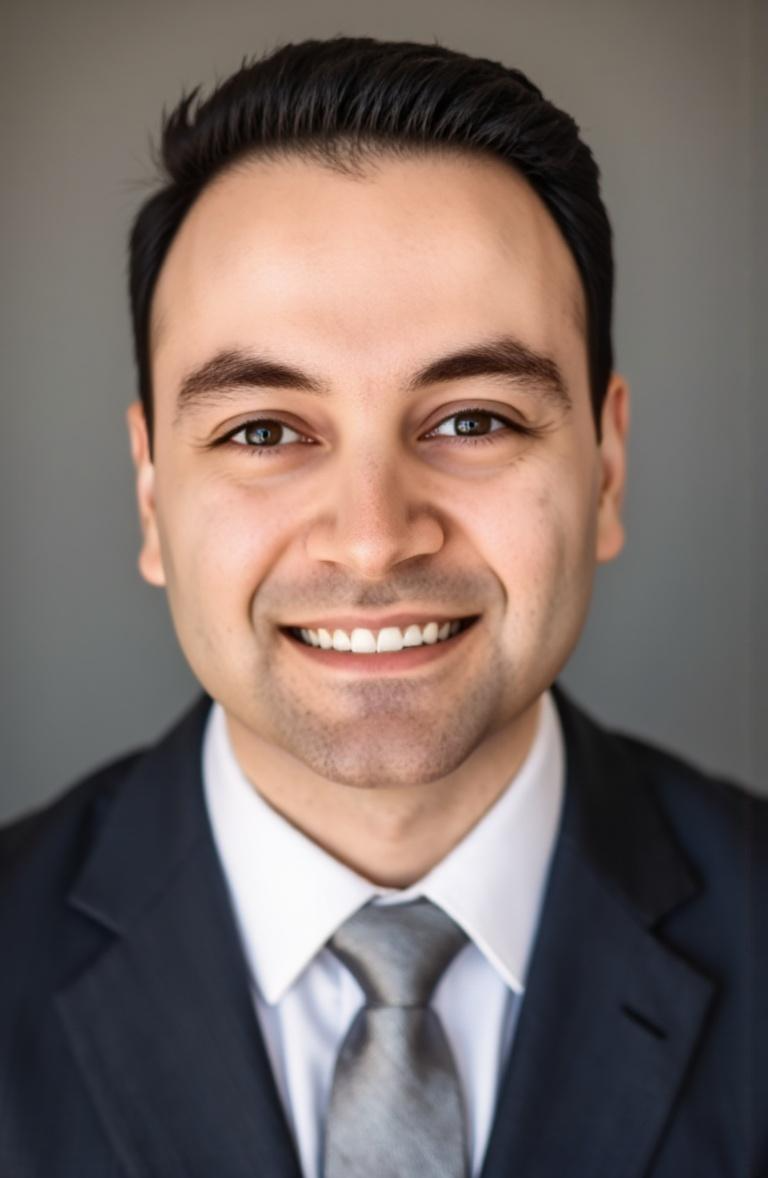



8 min read • By Dr. Kevin Baharvand, Diplomate, American Board of Orthodontics
SHORT ANSWER
Sometimes yes, sometimes no, and the honest reason it feels confusing is that orthodontists genuinely disagree. The decision comes down to arithmetic first: how much tooth you have versus how much jaw you have to put it in. When there is more tooth than space, you either create space or remove tooth. Expansion, filing between teeth, and moving molars back can all create space, but each has a limit. Beyond that limit, pushing teeth outward moves roots past the bone that supports them. Be skeptical of anyone who says they never extract, and equally skeptical of anyone who extracts routinely.
ON THIS PAGE
Few words in orthodontics create as much anxiety as extraction. It sounds destructive, and it sounds like a shortcut. Patients ask whether it is really necessary, and why straightening teeth would involve removing them. Both are fair questions and neither has a one-word answer.
It starts as arithmetic
Before anything philosophical, there is a measurement called arch length discrepancy. Add up the width of all the teeth in an arch. Then measure the length of the arch of bone they have to sit in. If the teeth need more room than the bone provides, that difference is the discrepancy, and it is the single most important number in this decision.
A small discrepancy of a couple of millimeters is easy to resolve without removing anything. A large one, say ten millimeters or more, usually is not, because you cannot manufacture that much space out of nowhere. In between is where judgment lives, and where two good orthodontists might genuinely land differently.
Crowding is the visible symptom of this. If you want the fuller picture, we cover crowding and how it gets fixed separately.
Ways to create space, and where each stops working
| Method | Roughly how much | The limit |
|---|---|---|
| Palatal expansion | Can be substantial in children | Depends on an unfused suture. In adults it becomes tipping teeth outward, not widening bone, unless surgical assistance is used. |
| Filing between teeth | A few millimeters across an arch | Only a small amount of enamel can safely be removed per contact. Useful for mild cases, not a substitute for real space. |
| Moving molars back | Modest | Runs into the bone at the back of the arch, and often into the wisdom teeth. |
| Flaring teeth forward | Varies | The quiet one. Pushes roots toward the outer plate of bone, risks gum recession, and can worsen a profile that was already full. |
| Extraction | Substantial per tooth | Irreversible, and can over-correct if the case did not truly need it. |
The fourth row is the one worth understanding, because it is how a case gets treated without extraction in a way that looks fine at debond and causes problems later. Teeth pushed beyond the bone envelope can trigger recession and tend to relapse. Avoiding extraction is not automatically the conservative choice.
Facial balance, and the sunken face myth
The fear that extraction flattens your face is worth addressing directly, because it is repeated constantly online and it is not baseless. It comes from an era when extraction was applied more routinely and some patients with already-flat profiles had their lips retracted further than served them. Those cases were real.
What changed is that lip support and profile are now part of the diagnosis rather than an afterthought. A patient with a full, protrusive profile often looks better after extraction, because the front teeth come back into a position the face was asking for. A patient with a flat profile and thin lips is exactly who should not have teeth removed casually, and that is measurable before anyone starts.
So the honest answer to whether extraction changes your profile is yes, deliberately. The question is whether your particular face wants that change. Asking to see the profile analysis is completely reasonable.
Why two orthodontists can disagree honestly
Patients often assume that a second opinion differing from the first means somebody is wrong or selling something. Sometimes. But borderline cases are genuinely borderline, and reasonable clinicians weigh the same tradeoffs differently.
Training matters here. Where and when someone did their residency shapes what they saw work and what they saw fail. So does experience: an orthodontist who has followed their own cases for twenty years has seen which non-extraction results held and which ones relapsed, and that shapes judgment in a way no course does.
There is also a legitimate middle path people rarely hear about. In some borderline cases we start treatment without extraction, resolve what we can, and reassess with real progress records in hand. Sometimes the space works out. Sometimes it becomes clear it will not, and the decision is then made with much better information than at day one. That is not indecision. It is refusing to commit to something irreversible before the evidence justifies it.
Why absolutes are the actual red flag
You will hear practices market themselves as never extracting. It sounds patient-friendly and it is genuinely appealing, especially against the sunken-face fear. You will occasionally hear the opposite, an office where extraction seems to be the answer to most crowding.
Both are the same error. A policy applied before the diagnosis is not a clinical philosophy, it is a preset. Faces and arches vary enormously, and a rule that ignores that variation will be wrong for a predictable share of patients in one direction or the other.
A good extraction decision is boring: measured, explained, and specific to you. If it sounds like a slogan, it was decided before anyone looked at your records.
What to ask if extraction is recommended
- How much crowding am I dealing with, in millimeters?
- What would happen if we did not extract? Not whether it is possible, but what the tradeoff would be.
- How does my profile and lip support factor into this?
- Which teeth, and why those specific ones?
- Is this a case where we could start and reassess, or is it clear from day one?
You should get specific answers with numbers in them. If you get reassurance instead, that is worth a second opinion, and any orthodontist confident in their plan will tell you to go get one. This is irreversible. Taking an extra two weeks to be sure costs you almost nothing.
Frequently asked questions
Will extraction make my face look sunken?
This is the most common fear and it is largely a myth in its strong form. The idea comes from older cases where too much retraction was applied to faces that could not afford it. Modern planning evaluates lip support and profile before deciding, and in the right case extraction improves the profile rather than flattening it. The real answer depends on your face, which is why it gets measured.
Which teeth usually get removed?
Most often first premolars, the teeth just behind the canines, because removing them creates space where it is most useful and the gap closes predictably. Sometimes second premolars, occasionally a single lower incisor in specific situations. Wisdom teeth are a separate discussion and are not part of making space for alignment.
Can expansion always avoid extraction?
No, and this is where you should be skeptical of absolutes. Expansion works well in growing children with a narrow upper jaw, and it genuinely avoids extraction in many cases. In adults the upper jaw suture has fused, so what looks like expansion is often just tipping teeth outward, and there is a limit before you push roots past the supporting bone.
Is it reversible if I change my mind later?
No. That is precisely why the decision deserves records, measurement, and an explanation you actually understand. If you feel rushed toward extraction, ask for the numbers behind it or get a second opinion. Any orthodontist confident in the plan will welcome that.
Does extraction make treatment take longer?
Usually somewhat, because closing extraction spaces takes time. Expect a few extra months compared with a similar non-extraction case. The tradeoff is a result that fits within the bone and tends to be more stable.
My orthodontist says they never extract. Is that good?
Treat any absolute with caution, in either direction. Never extracting and always extracting are both positions that ignore the individual case. What you want is someone who explains why your particular arch length and profile point one way or the other.
Been told you need extractions?
Bring your records and we will walk through the measurements with you, including if we agree with the original plan. Two Frisco offices plus The Colony.
You may also be interested in these
- What Is Teeth Crowding and How Can It Be Fixed?
- Palate Expansion in Adults: Is It Possible?
- Filing Between Teeth: What It Is and When It Helps
Why families trust Elate Orthodontics
1,000+ five-star reviews • 3 offices (two in Frisco, one in The Colony) • D Magazine Best Dentist 2026 • Living Magazine Readers’ Choice 2026
With over 1,000 five-star reviews across three locations, Elate Orthodontics is led by Dr. Kevin Baharvand, DMD, MS, a Diplomate of the American Board of Orthodontics, whose clinical work was recently selected for the cover of the American Journal of Orthodontics and Dentofacial Orthopedics, the most prestigious peer-reviewed journal in the field, and a national speaker on clear aligner treatment. Alongside Dr. Julia Kang, DMD, MS, both Boston University graduates and members of the Omicron Kappa Upsilon national honor society, our husband-and-wife team has been recognized as D Magazine Best Dentist 2026, Living Magazine Readers’ Choice 2026 Best Orthodontist in Frisco & Plano, Readers’ Choice Best Orthodontist in The Colony, Best New Business by the Chamber of Commerce, Nextdoor Neighborhood Favorite, and featured in Orthotown and Authority Magazine.
We serve families through three convenient offices in West Frisco, North Frisco, and The Colony, each staffed by the same trusted team, equipped with advanced technology, and committed to the personalized approach that consistently helps patients finish treatment sooner than expected. From braces and clear braces to Angel Aligners, we offer treatment for every age and every stage of life. We stay in-network with most insurance plans and offer flexible financing to make exceptional orthodontic care accessible for every family we serve.
Need general and family dentistry too? Our sister practice, Tribute Family Dentistry, provides dental care for all ages.
Book a free consultation: 972.538.4343
About the author
Dr. Kevin Baharvand, DMD, MS, is a Diplomate of the American Board of Orthodontics and a national speaker on clear aligner treatment. He practices at Elate Orthodontics in West Frisco, North Frisco, and The Colony, Texas.